Showing posts with label miso black cod. Show all posts

Nobu for Brunch (Toronto)

Nobu’s all-you-can-eat Sunday brunch ($110 per person, $55 for children 5-12 years old) is sprinkled throughout the second floor of the restaurant. As you’re guided to your table, hot food and carving stations line the walkway, doing a great job of whetting your appetite. Front and centre in the bright dining room is the sushi bar, where a team of chefs continuously turns out maki and nigiri. Off in the corner sits the dessert table, with a ceviche and spicy cucumber salad ice bar tucked in for good measure.

I appreciated how the food stations are spaced out. There’s no dreaded bottleneck of diners waiting, nor that frantic urge to grab everything at once just to avoid lining up again.

Chef Nobu Matsuhisa was one of the pioneers of Japanese-Peruvian cuisine back in the mid-90s. At the time, dishes like spicy tuna crispy rice and yellowtail crudo felt fresh and exciting, while miso black cod became a signature that kept people coming back. These are still dishes I enjoy, but decades later they’ve been copied endlessly, making what’s served at Nobu feel far less groundbreaking than it once was.

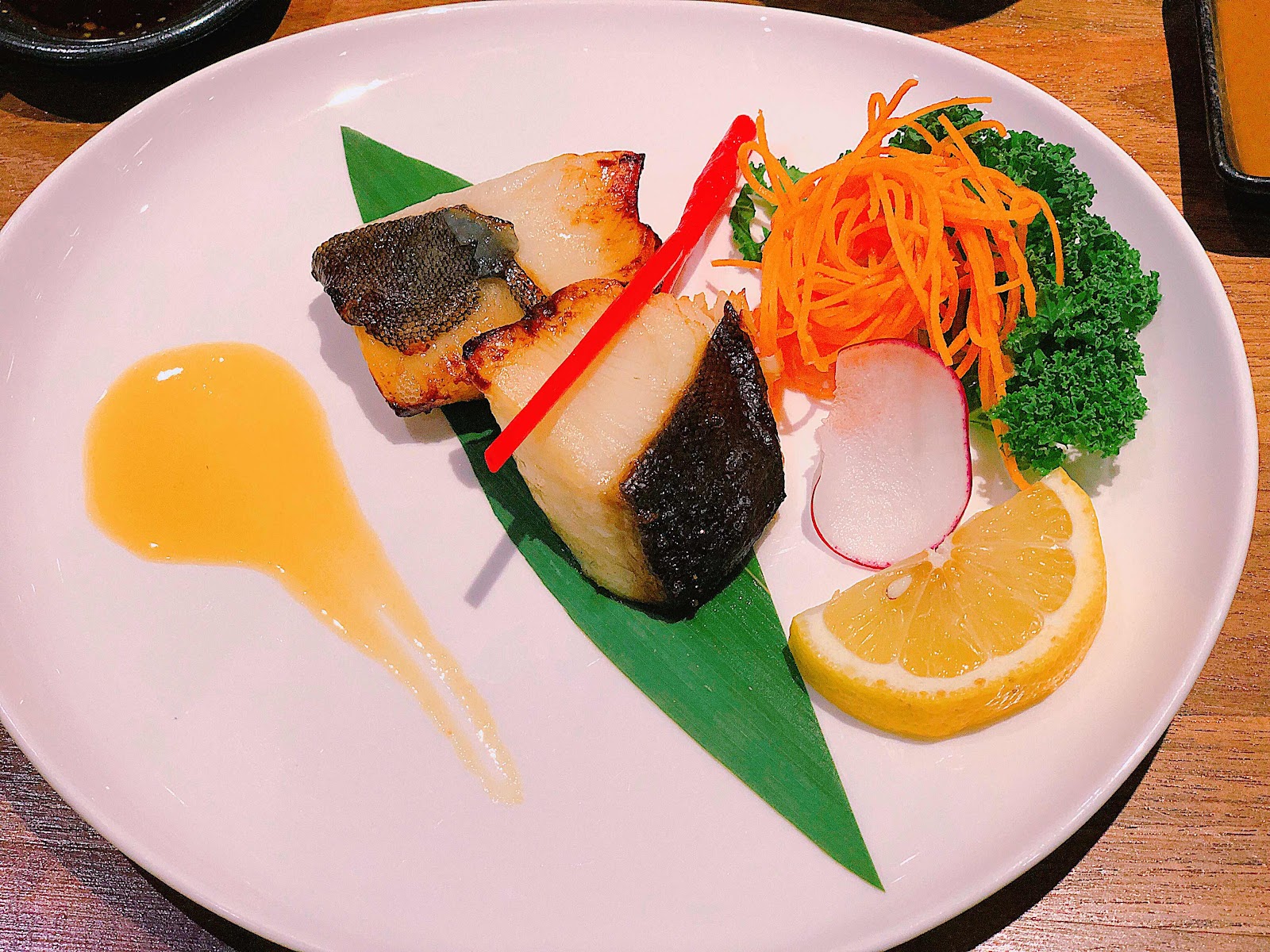
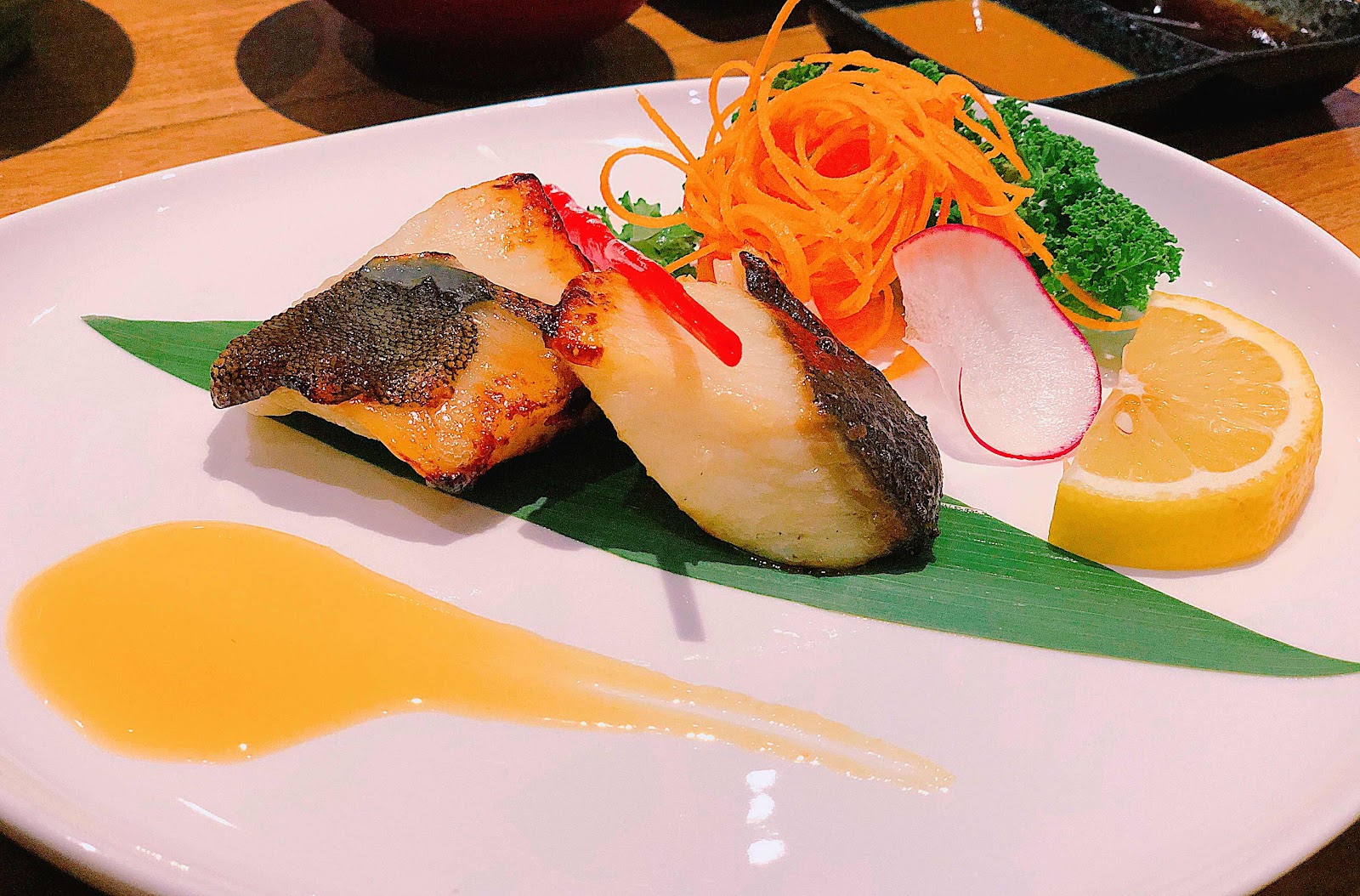
If you’re going for the miso black cod, make sure you get it hot. My first bite, taken from a platter that had been sitting, was bland and slightly fishy. A second round, straight from a freshly placed tray, was noticeably better. It’s tasty, but it didn’t rank among the best miso cods I’ve had.

The crispy rice station is a great idea in theory, but the execution falters. The wooden spoons make it awkward to scoop up the rice nuggets, and many of the serving utensils (spring-hinged chopsticks and oversized soup ladles) are poorly suited for a buffet.

Thankfully, the soft-serve ice cream station sits right beside the crispy rice, so I grabbed a simple stainless steel teaspoon. It turned out to be the perfect tool for neatly dolloping finely chopped tuna, salmon, and mashed avocado onto each bite. The crispy rice itself would benefit from being thinner and longer for easier spreading and eating.

Unsurprisingly, the sushi was underwhelming, even when taken from freshly dropped plates. The rice was bland and too cold, though at least the pieces were kept small, letting the fish take centre stage. All things considered, it’s better than most buffet sushi, though I usually steer clear of buffet sushi stations altogether.

Some of my favourite bites ended up being the unexpected ones. Nobu’s Greek salad has a generous feta-to-vegetable ratio that leans salty but spooning it over the garden salad below helps balance things out nicely.

The prime rib carving station also drew me back for seconds. While the meat quality wasn’t exceptional, the variety of sauces made it fun to sample and customize each bite.

Despite not having a big sweet tooth, I found it hard to resist the dessert spread. The pandan-laced crème brûlée and flan-like matcha panna cotta were standouts. Just do yourself a favour and skip the dry Earl Grey beignets.

Nobu offers something for everyone including the breakfast staples of bacon, sausage, tater tots, and eggs. Just be warned: their scrambled eggs are the ultra-soft, almost runny style popular in many Asian cuisines, which isn’t for everyone.

Nobu’s Sunday brunch is fun and indulgent - just don’t expect to be blown away by anything. It’s worth doing once for the experience and is a great option for an unhurried catch-up with loved ones (they did not kick us out after 2 hours). Some hits, some misses, and plenty of options to keep everyone at the table happy. Just make sure you grab the good stuff while it’s hot.

Overall mark - 6 out of 10


How To Find Them
 Location: Toronto, Canada
 Address: 25 Mercer Street


Follow me on twitter to chat, be notified about new posts and more - https://twitter.com/GastroWorldBlog
____________________________
Gastro World's Grading System

  • Anything under 5 - I really disliked and will never go back
  • 6 - decent restaurant but I likely won't return
  • 7 - decent restaurant and I will likely return
  • 8 - great restaurant that I'd be happy to recommend
  • 9 - fantastic restaurant that I would love to visit regularly and highly recommend
  • 10 - absolute perfection!


Is That It? I Want More!

Other Gastro World posts similar to this:


The Sushi Bar Revisited in 2022 (Toronto)

If you could get any vanity license plate for your car, what would it say? The owner of Sushi Bar would use “Dr Sushi” as indicated by the plates hung on the wall, it’s a whimsical touch I hadn’t noticed in the past, along with pictures of family and friends that provide a glimpse into their private lives.

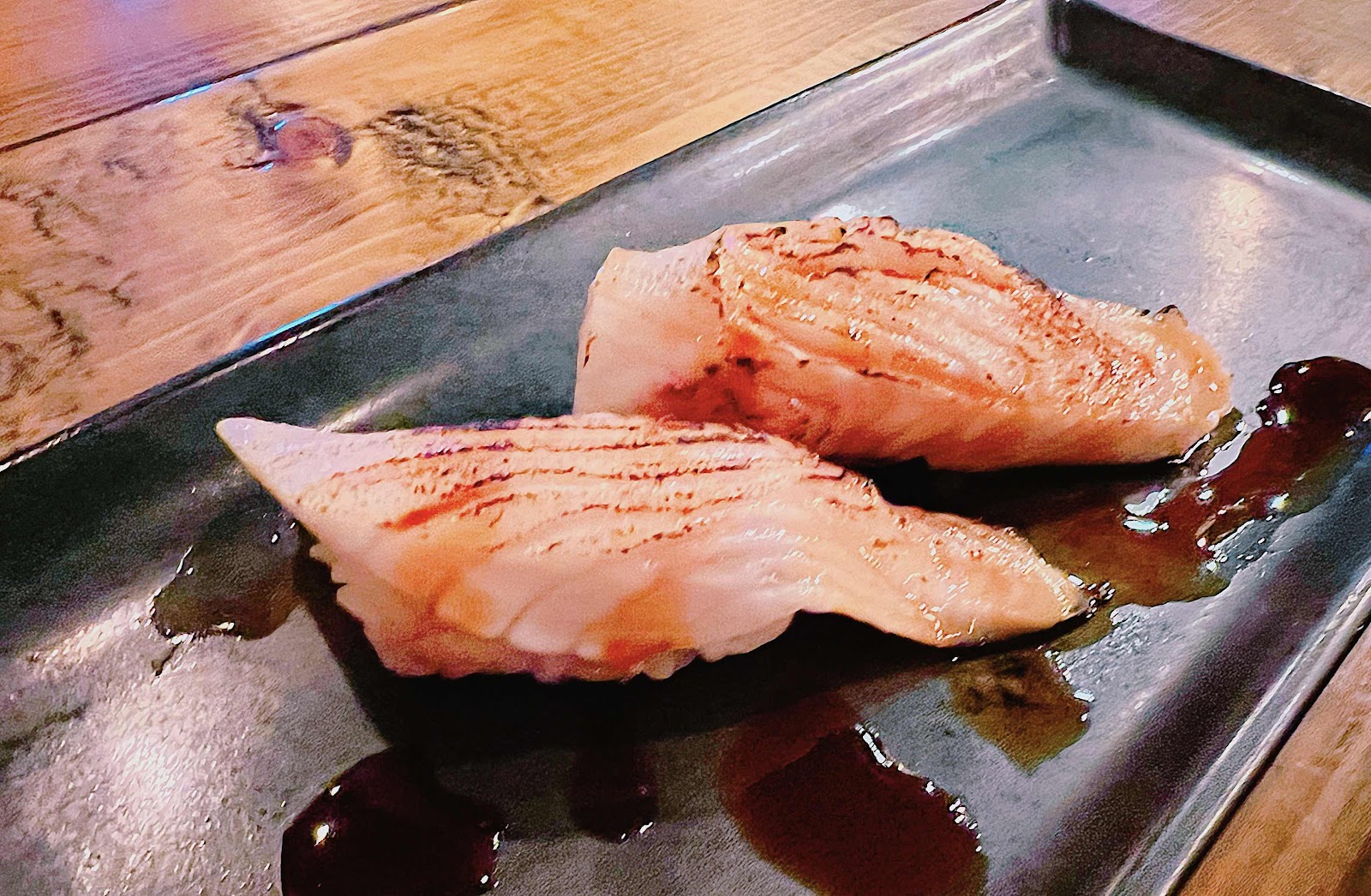
The wall is also where they post their specials including black cod sushi and lobster maki. The black cod sushi ($10 for 2 pieces) is an interesting take on the fish, the nigiri torched tableside so the fish’s fat begins to melt forming slight layers in the cod. Being a denser fish, it does need a fair amount of flavour and while the sweet soy was a start, it needed something else for interest. After the experience, I’m still on the fence of whether a nigiri is the best use of this prized fish.

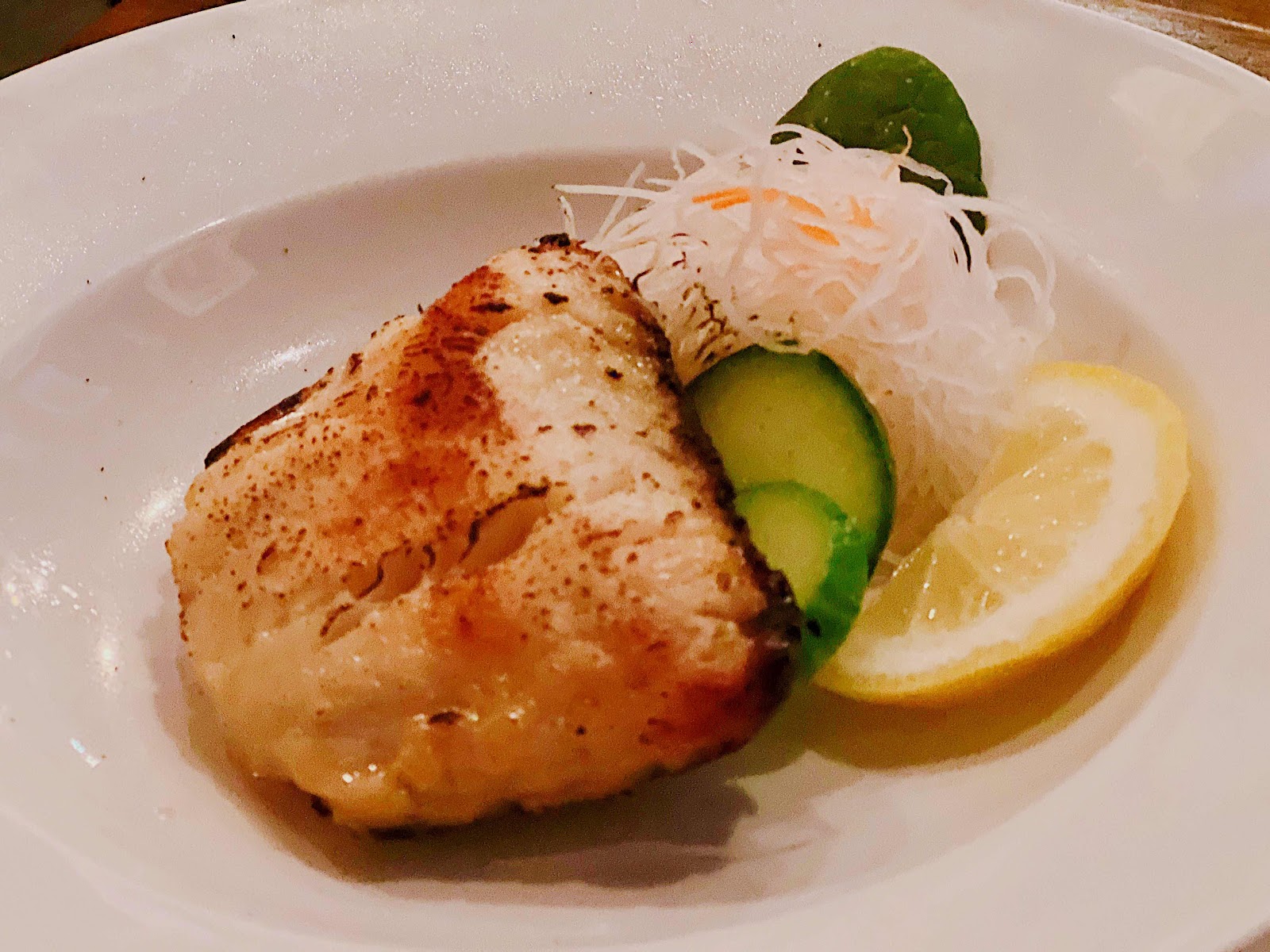
My preference is still for the baked miso marinated black cod ($15) where the fish is hot and flaky and infused with a slightly sweet umami flavour. The palm-sized portion is just enough for sharing amongst two people.

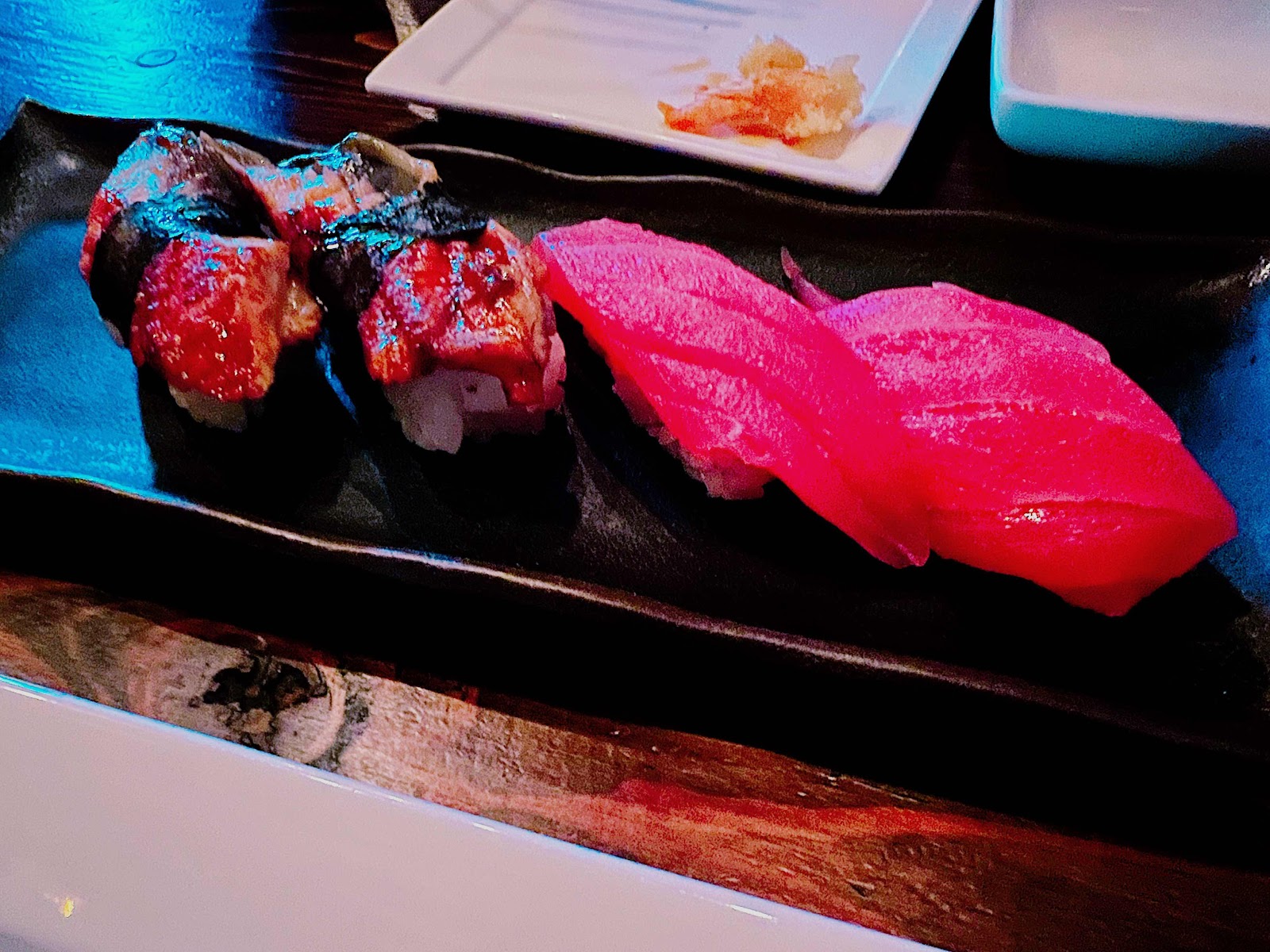
Sushi Bar’s other a-la-carte nigiri is just as good with large pieces of barbeque eel on the unagi and a thick slice of ruby red tuna on the maguro (both $7 for 2 pieces).

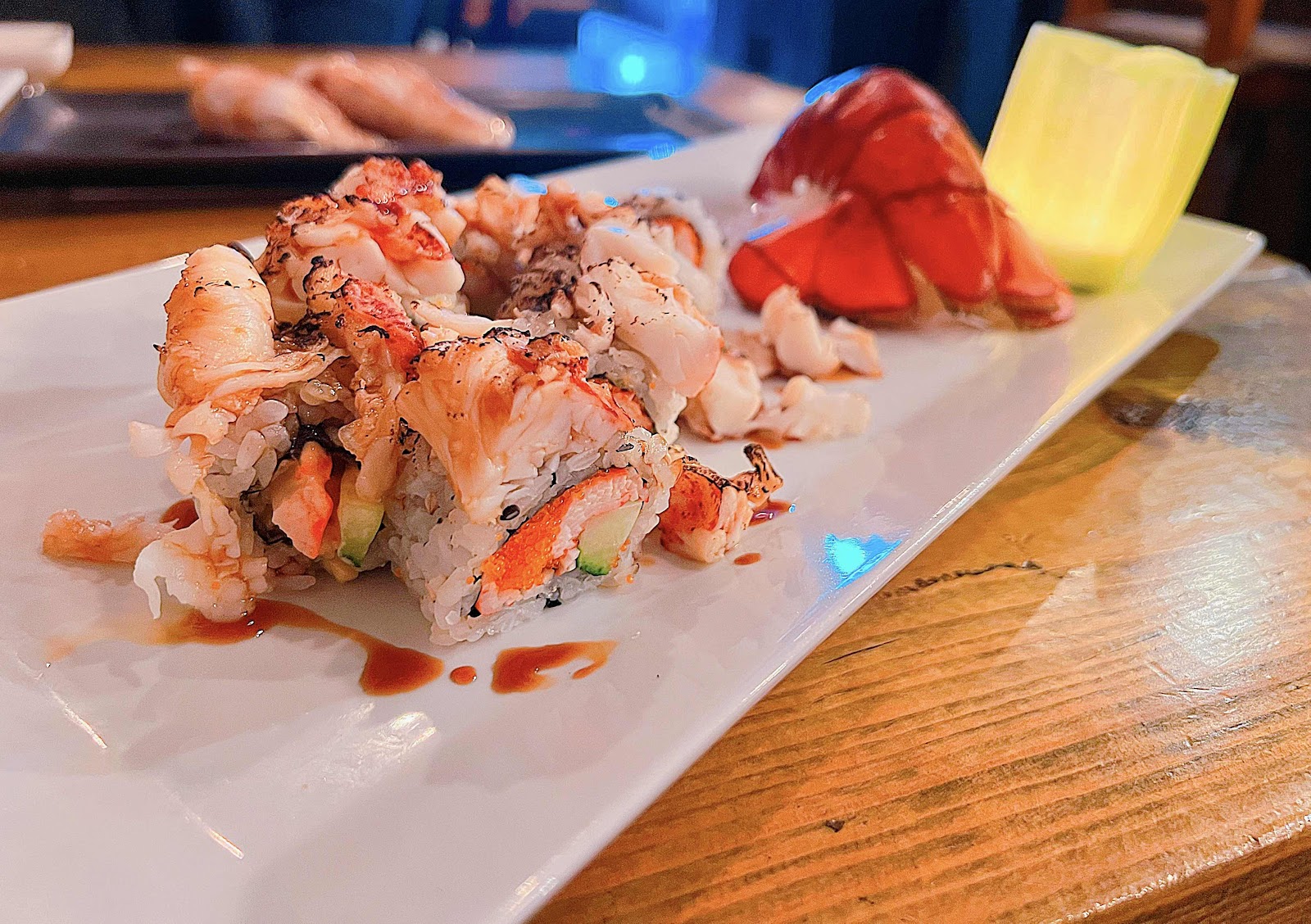
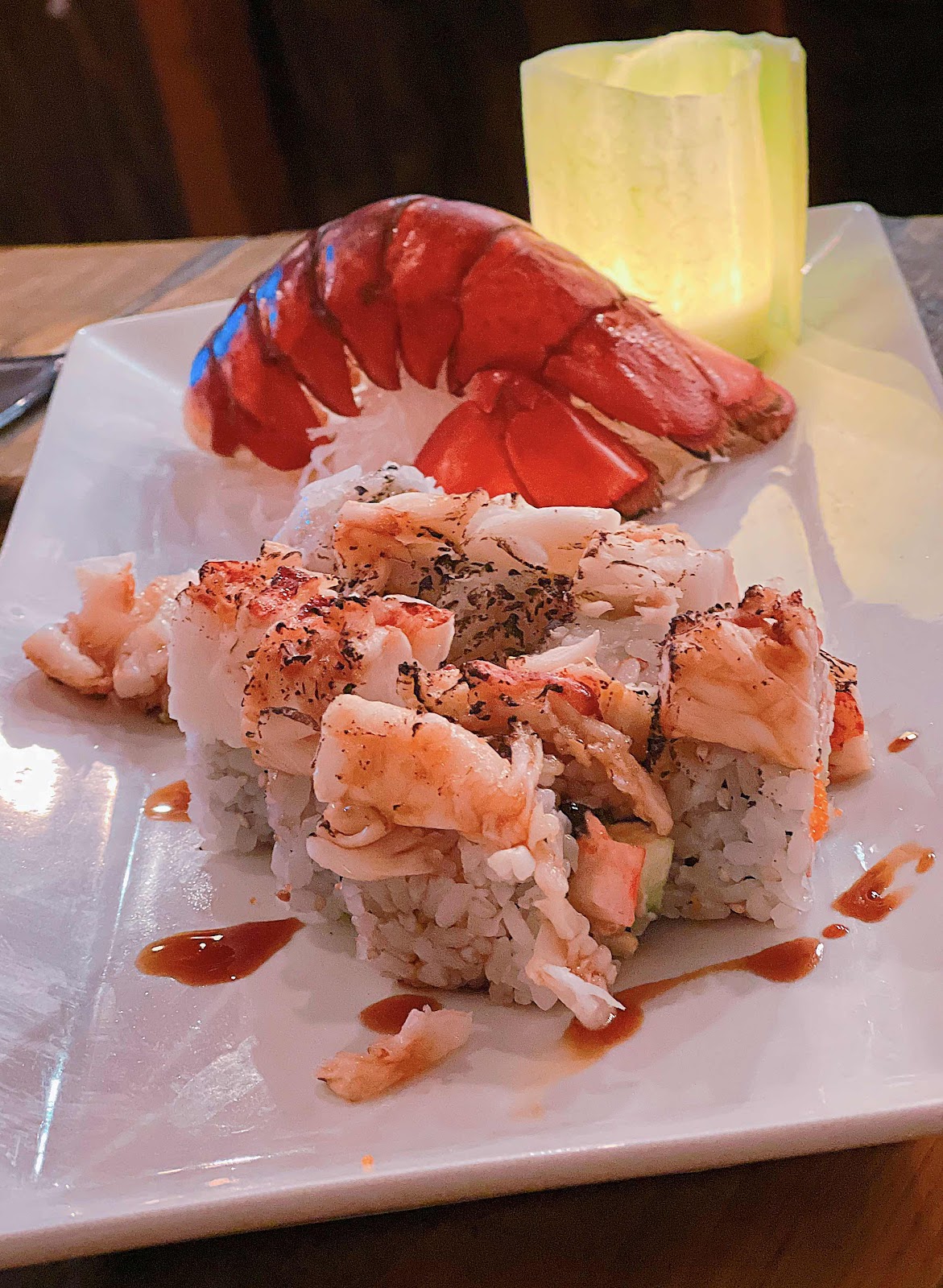
Displaying the lobster on top of the lobster roll ($18) was a great idea as it becomes the first thing you taste, and diners can see the full tail in its glory. However, it was already overcooked and blowtorching it at the table made it even more dry and chewy. Ideally, they should undercook it to begin, and the torching will help heat and finish off the doneness at the table. It’s a dish with promise and the thin cucumber lantern a great idea for a beautiful garnish.

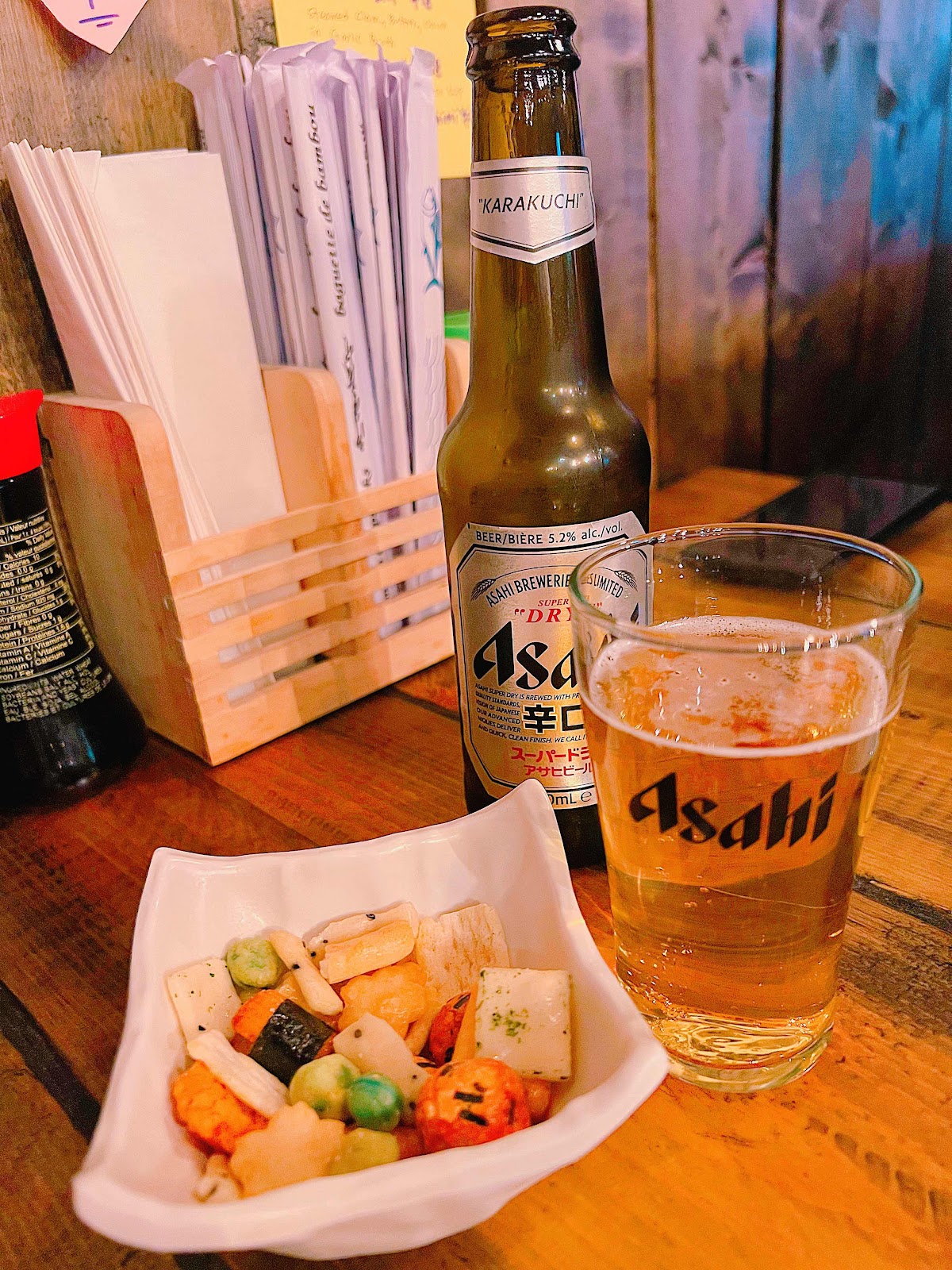
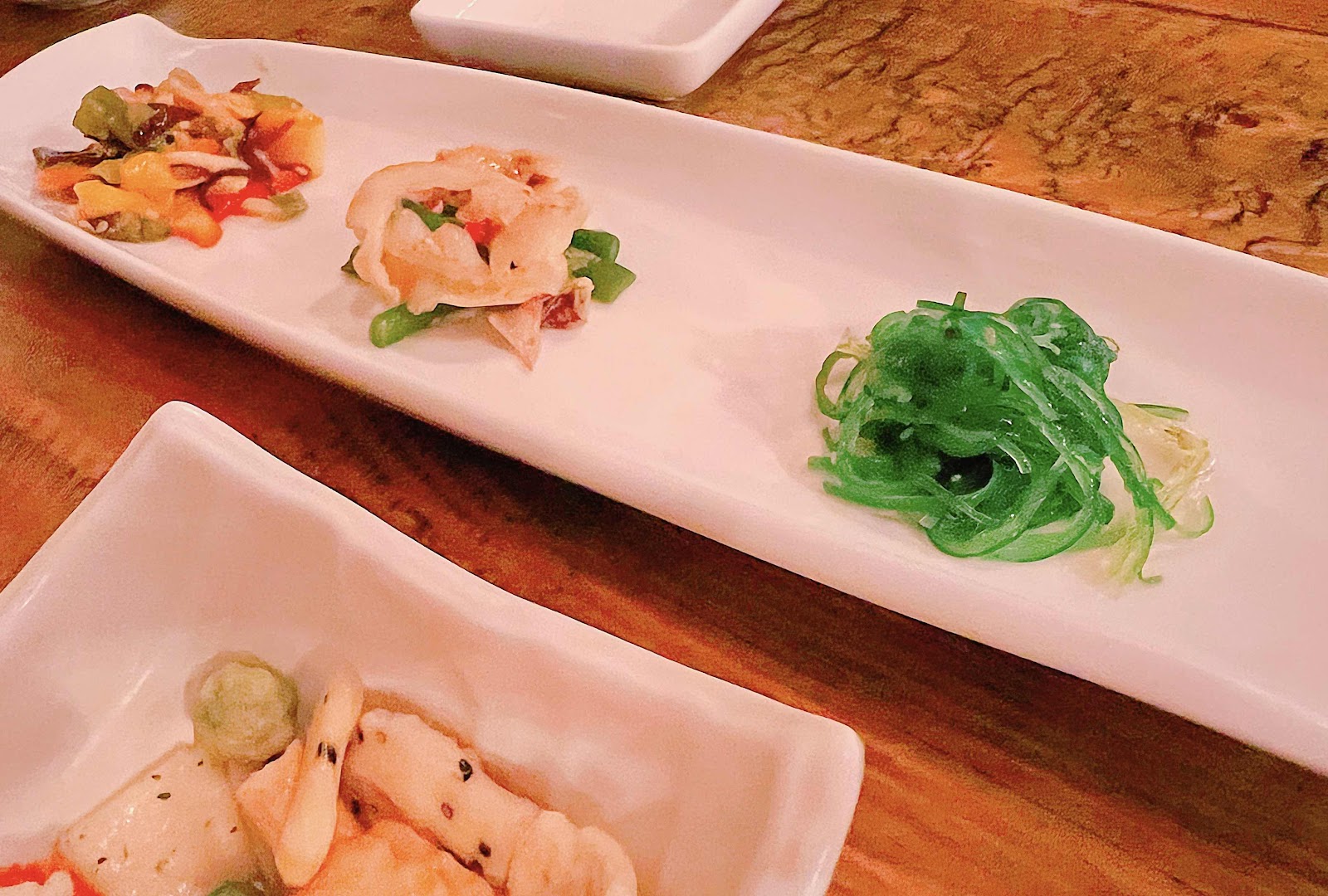
Starting every meal is a bowl of rice crackers that arrives with drinks, a pre-pandemic tradition that I’m glad has been kept, providing something to snack on as we peruse the menu. A new addition is an amuse bouche of seafood, squid, and seaweed salads, enough for a bite each to enjoy while the rest of the meal arrives.

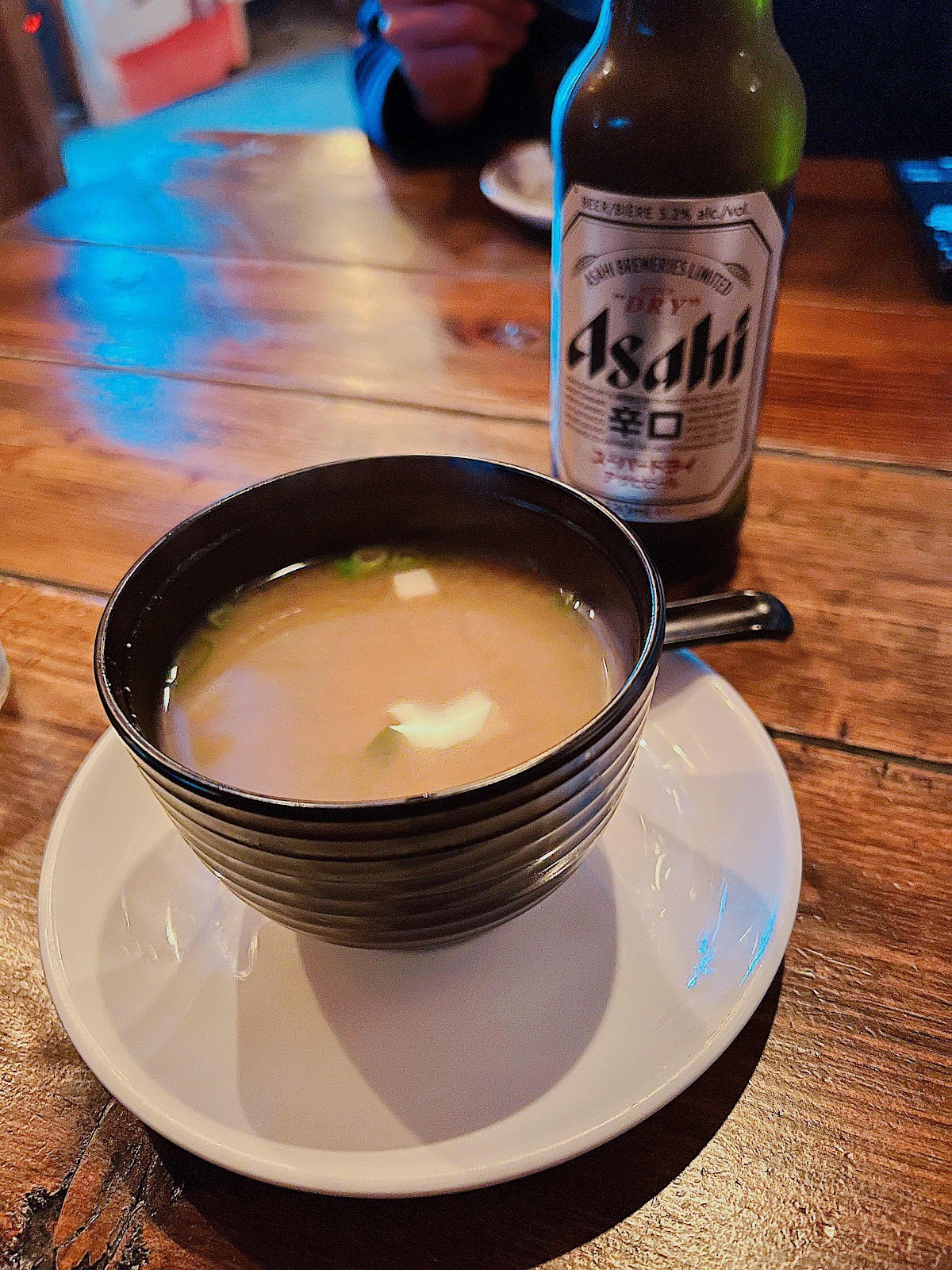
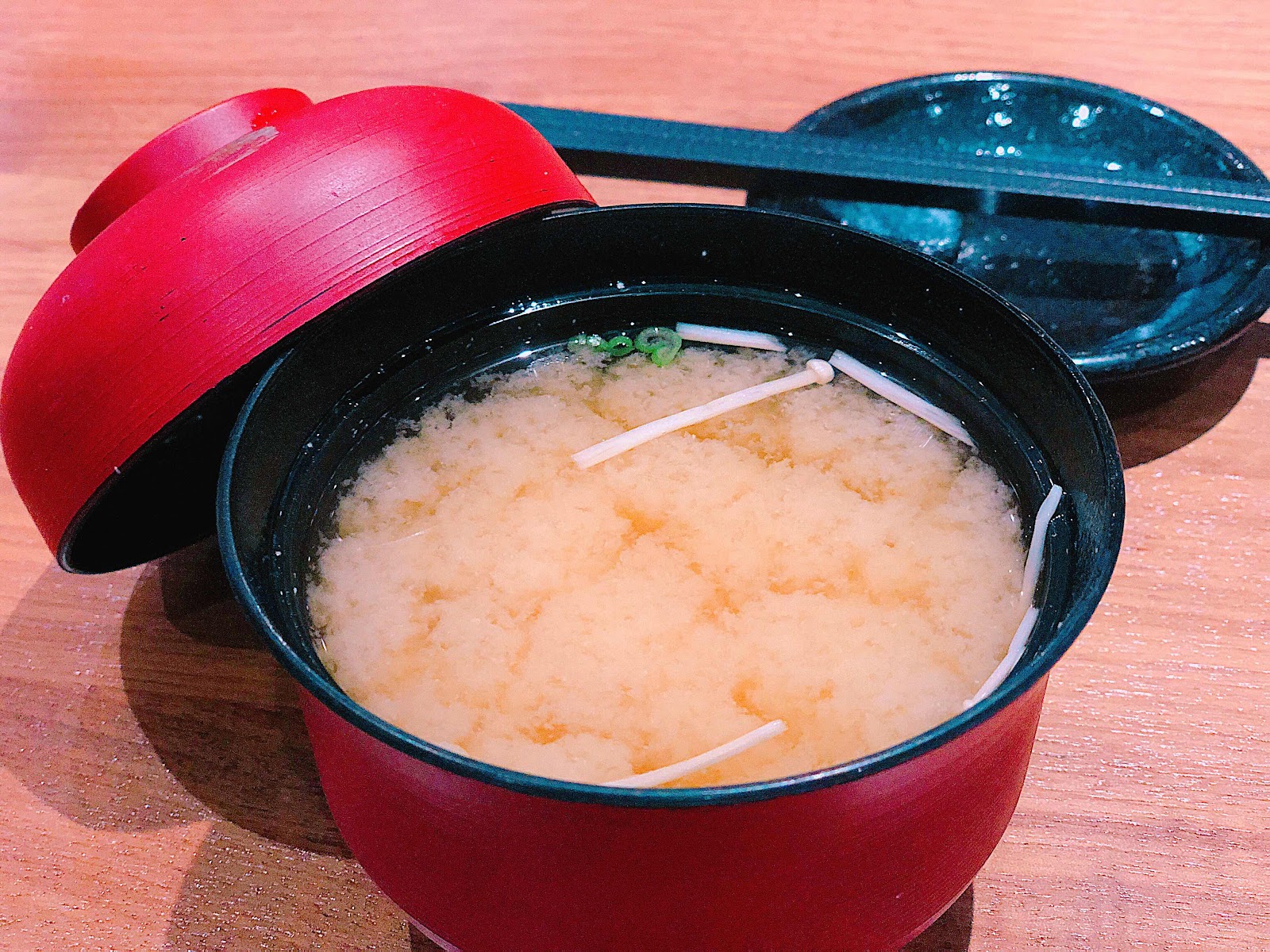
As the temperature drops, the complimentary starter is sometimes a rich hot bowl of miso soup with cubes of tofu and seaweed flakes. A welcomed respite after a cool walk to the restaurant.

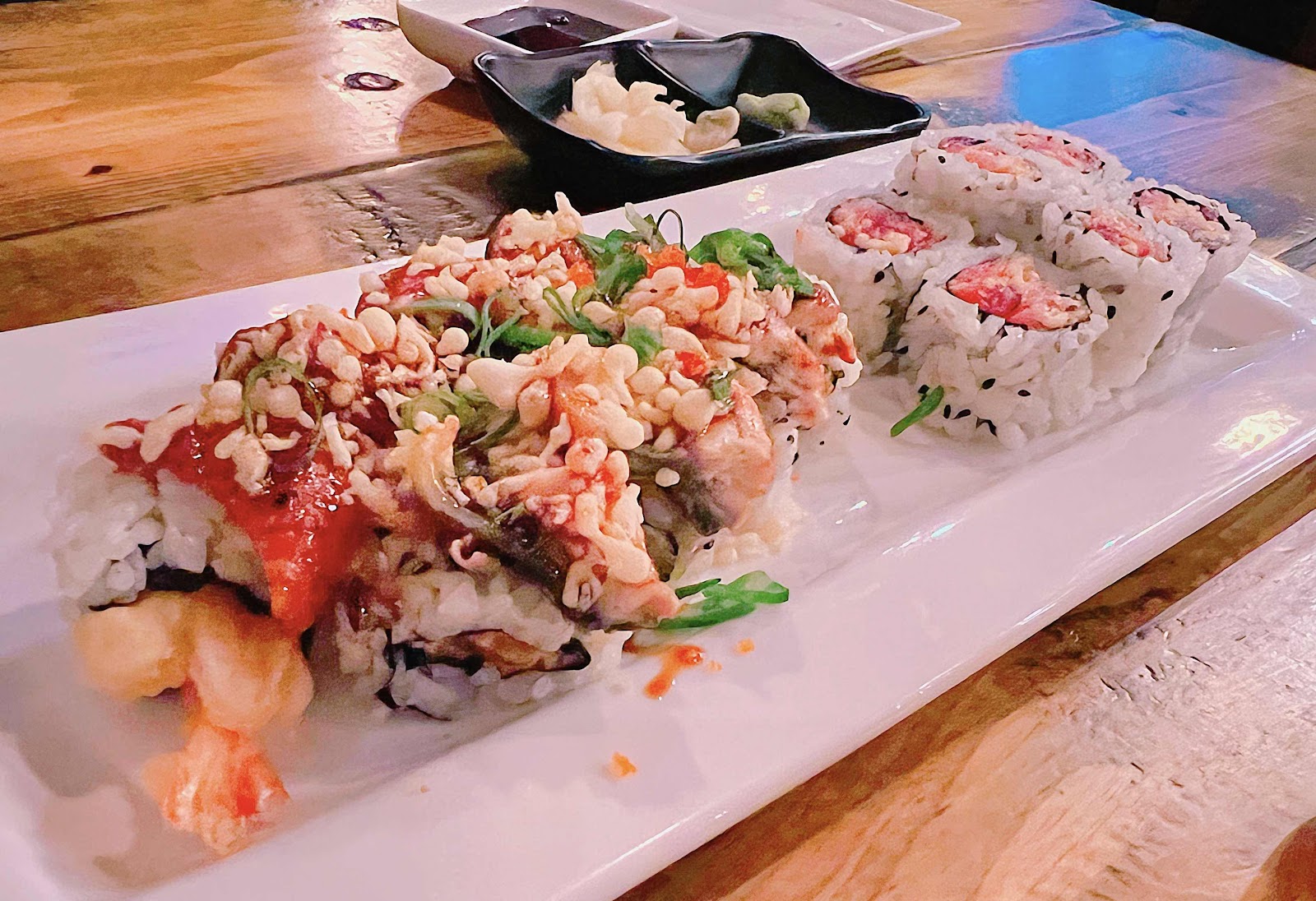
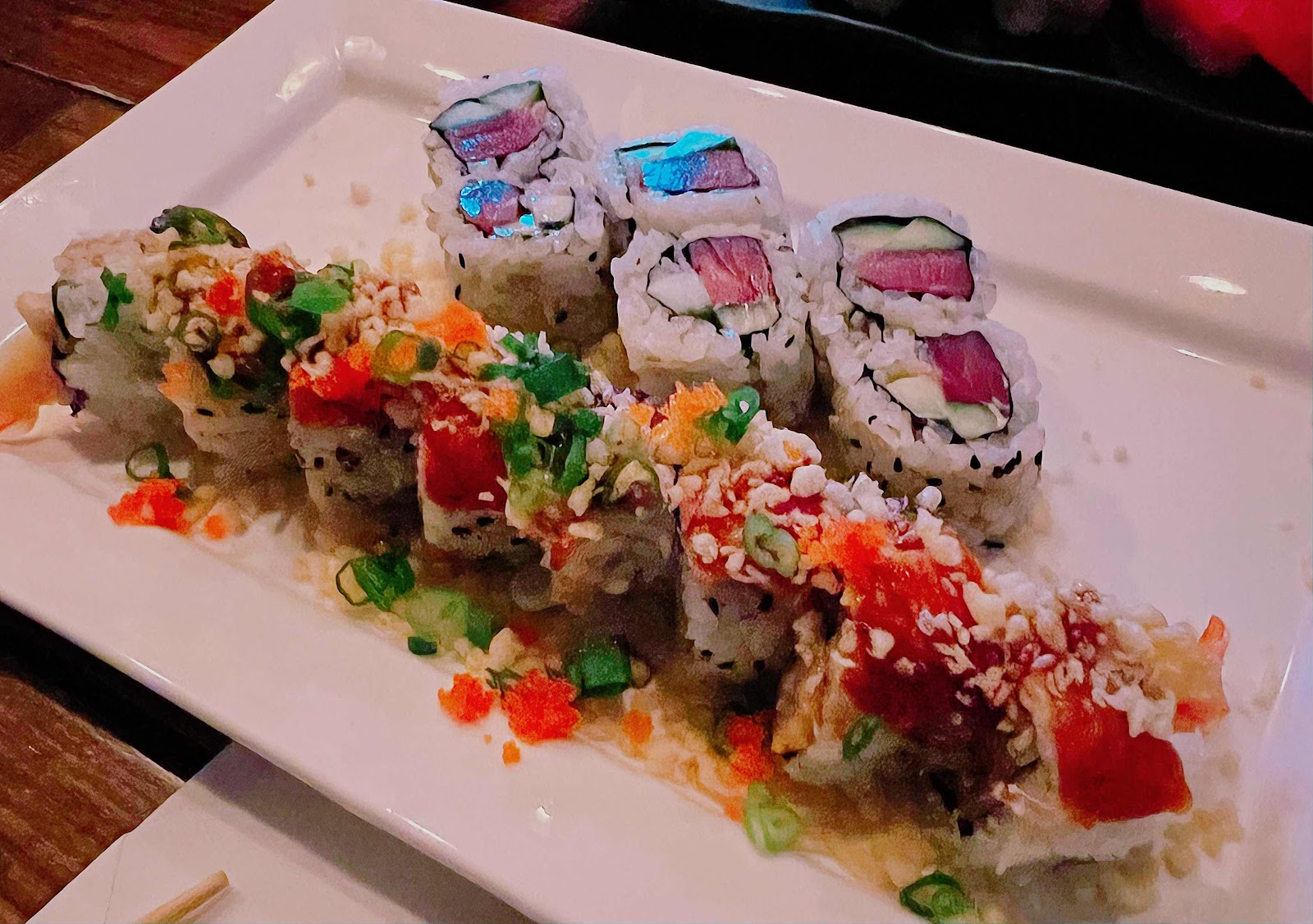
With a variety of maki available, the black dragon ($17) was an interesting take on the fancier dynamite roll. In this case, sweet-glazed barbeque eel, tempura bits, fish roe, and green onion wrapped around the shrimp tempura. It’s a colourful creation offering a variety of textures and flavours and it’s ideal that the pieces aren’t overly large so that they are enjoyed in one bite.

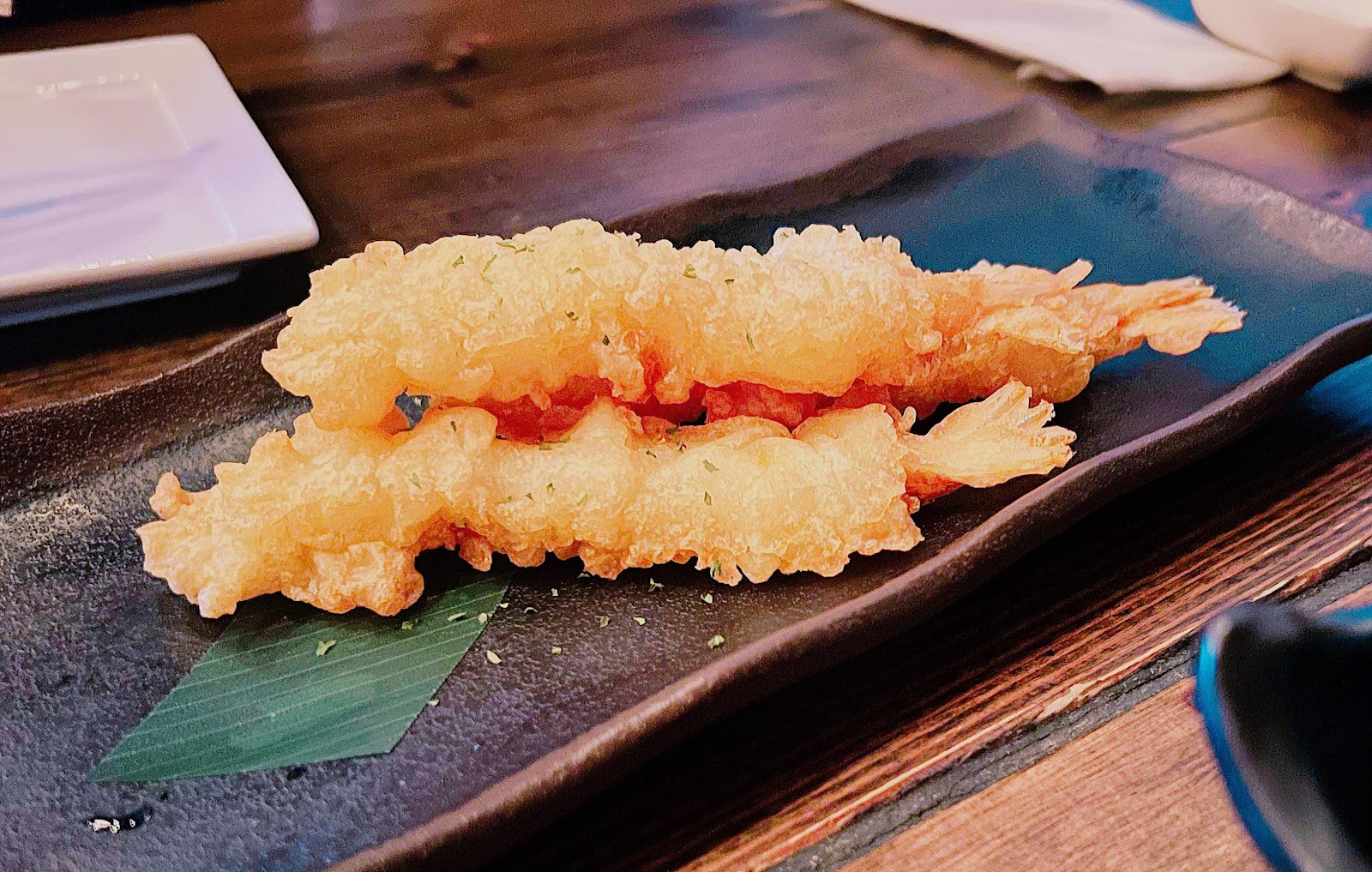
The red dragon ($17) is just as good, substituting the barbeque eel for salmon instead. If you’re in the mood for shrimp tempura ($8 for 3 pieces), I’d recommend having it in maki-form as the fried shrimp by itself is underwhelming, the batter too thick and the temperature tepid at best.

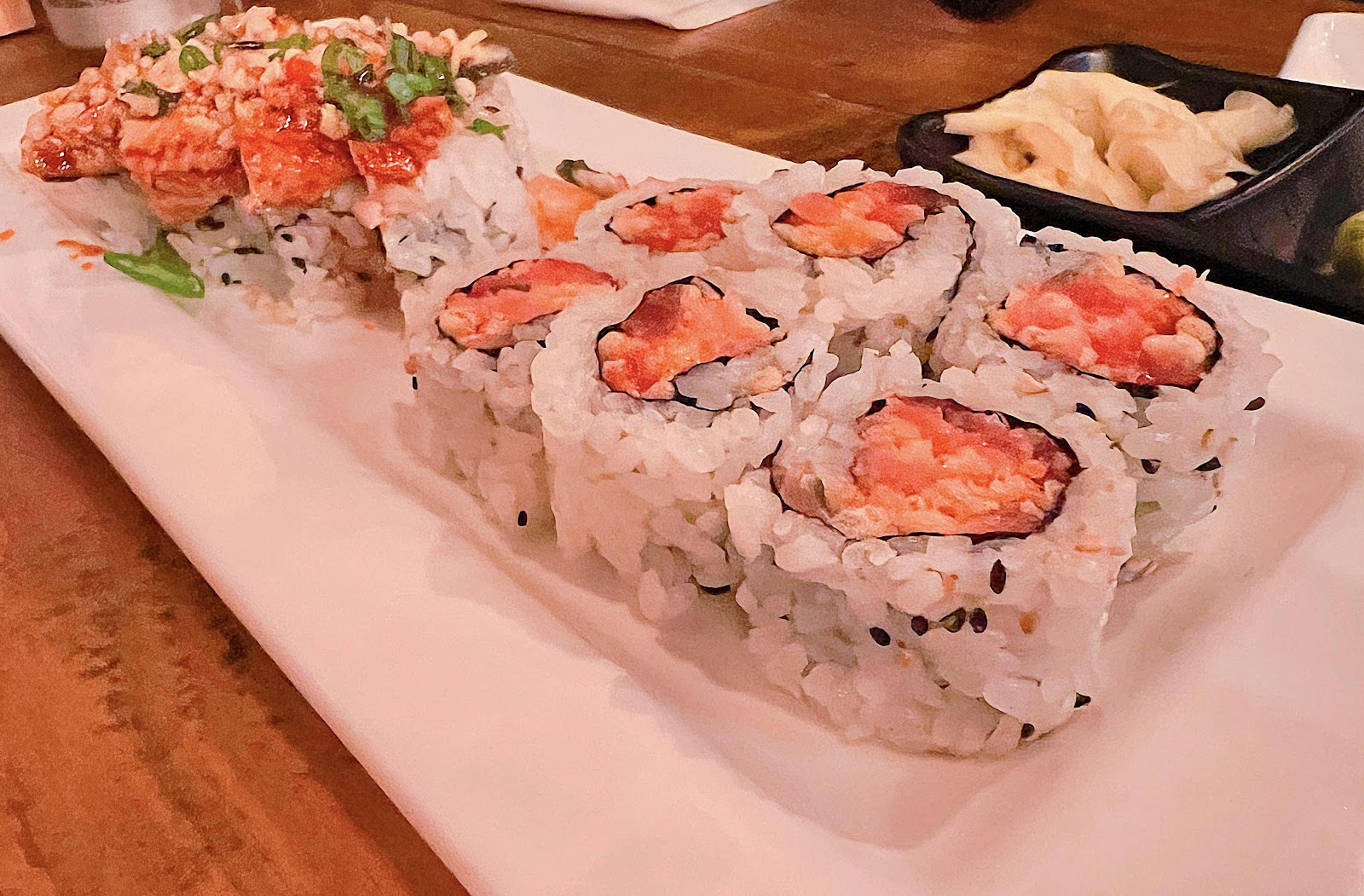
Upsold to the tuna tartare roll ($10), we should have stuck with the tried-and-true spicy tuna ($8). In the tartare, the tuna too pulverized and the filling including dreaded tempura bits that causes the roll to become gummy. It also needs more heat to be considered spicy tuna.

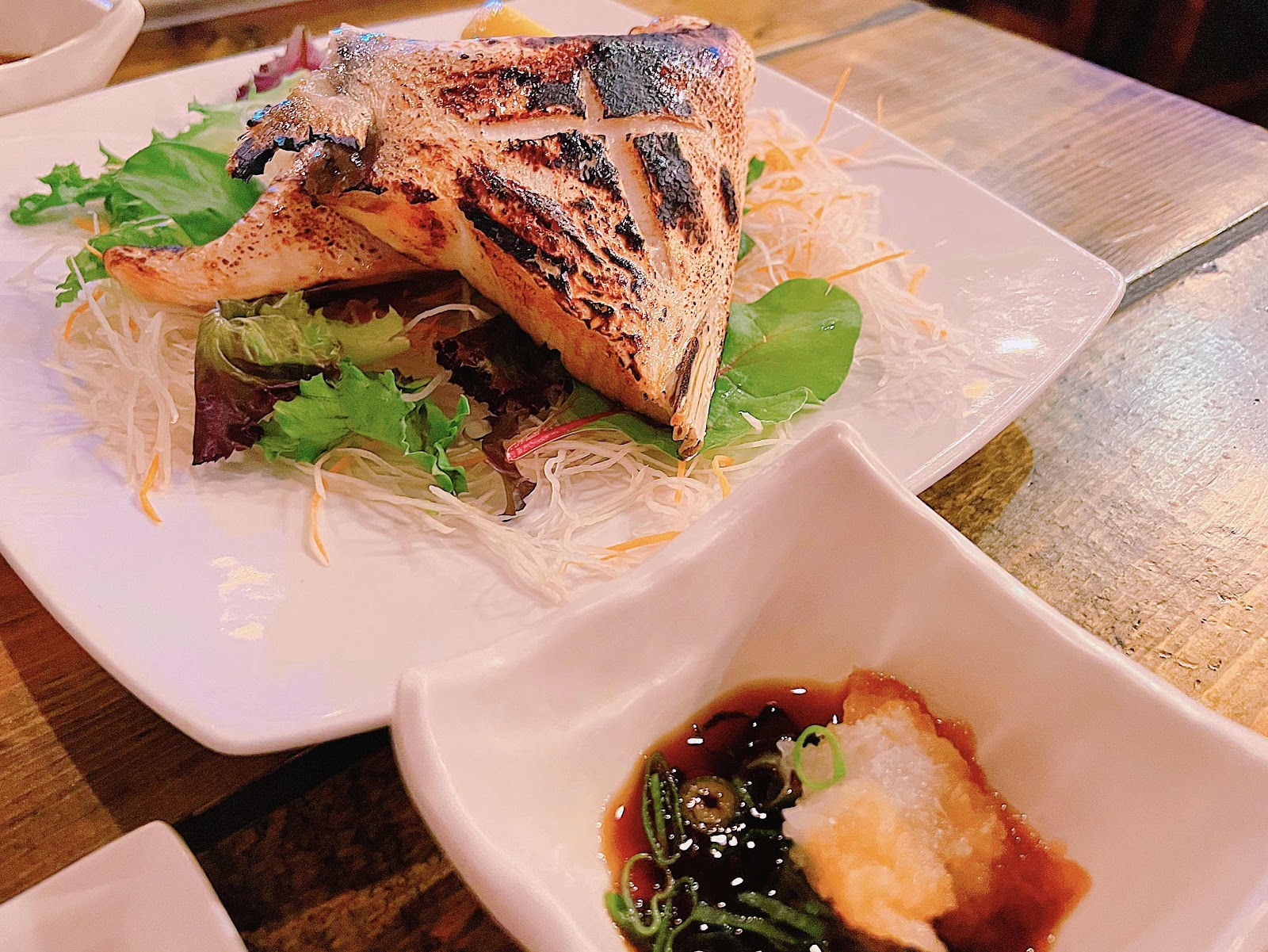
Despite their name, Sushi Bar also makes a variety of non-sushi dishes. You get a hefty portion of hamachi kama ($19) with the full portion, a meaty cut of the fish’s jaw. A thicker cut, there were parts of the fish that could have been done a touch less but being a bone-in piece, it can be hard to gauge. Nevertheless, the skin was crispy and the fish hot and delicious. Served with a radish ponzu soy sauce, a bit more salt sprinkled onto the fish would help it pop.

Since our past visits, my husband and I noticed an improvement at Sushi Bar: the maki seemingly contains less rice and are cut to the perfect bite-sized pieces and more emphasis is placed on plating the izakaya-type dishes.

There’s also a host of regulars, stopping by the open kitchen to speak to everyone before departing the restaurant. This creates a cozy neighbourhood-feel to Sushi Bar that matches the photos adorning the walls. As Mr. Rogers sang, “A beautiful day for a neighbour. Would you be mine? Could you be mine?”

Overall mark - 7 out of 10


How To Find Them
 Location: Toronto, Canada
 Address: 3365 Yonge Street


Follow me on twitter to chat, be notified about new posts and more - https://twitter.com/GastroWorldBlog
____________________________
Gastro World's Grading System

  • Anything under 5 - I really disliked and will never go back
  • 6 - decent restaurant but I likely won't return
  • 7 - decent restaurant and I will likely return
  • 8 - great restaurant that I'd be happy to recommend
  • 9 - fantastic restaurant that I would love to visit regularly and highly recommend
  • 10 - absolute perfection!


Is That It? I Want More!

Other Gastro World posts similar to this:


KOKO! ShareBar (Toronto)


Images of cheery smiling cartoon characters flash through my mind when I heard the name KOKO Share Bar. Bubble-eyed creatures that blink with earnest and flash big smiles as they proclaim the importance of love and sharing, almost like a trippy Care Bear. In reality, KOKO is set up like many traditional izakayas with sparse wooden tables and black chairs, each table divided by a tall pane of plastic in the new COVID era. Not one anime character anywhere… I couldn’t decide if I should be relieved or disappointed.


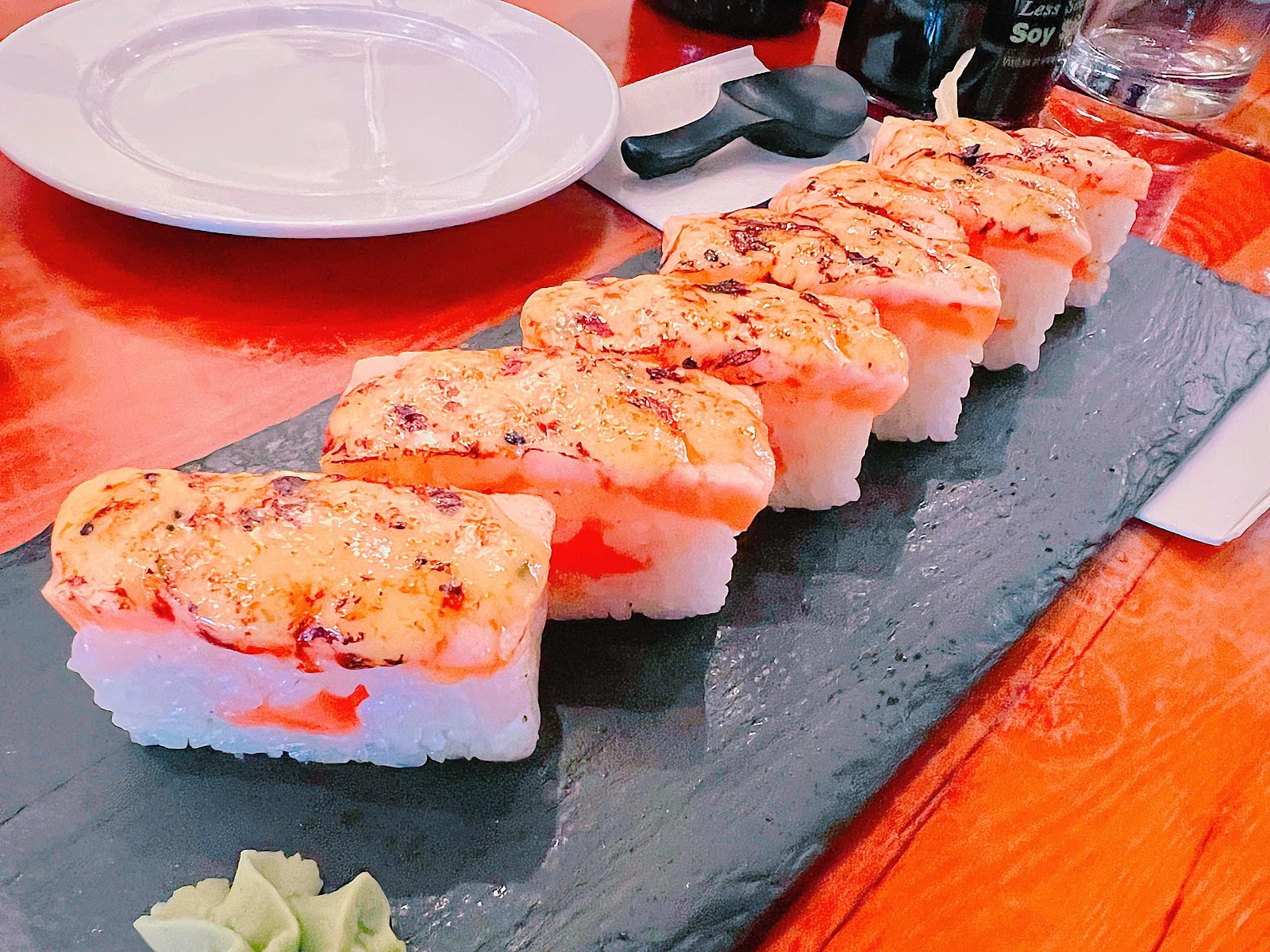
And in a very unlike me manner, we also didn’t share at the Share Bar. It didn’t stop me from ordering the salmon aburi sushi ($20) to start, the rice adorned with thick cuts of salmon topped with lime aioli. At KOKO, there was just enough of the mayo to take on a hint of smokiness and to add a splash of creaminess without making the sushi greasy. I would have liked some stronger finishing ingredients to create more interest – like the customary jalapeno slice, a dab of chopped olives, or even a sprinkling of green onions. The aburi was good but lacked pizazz.


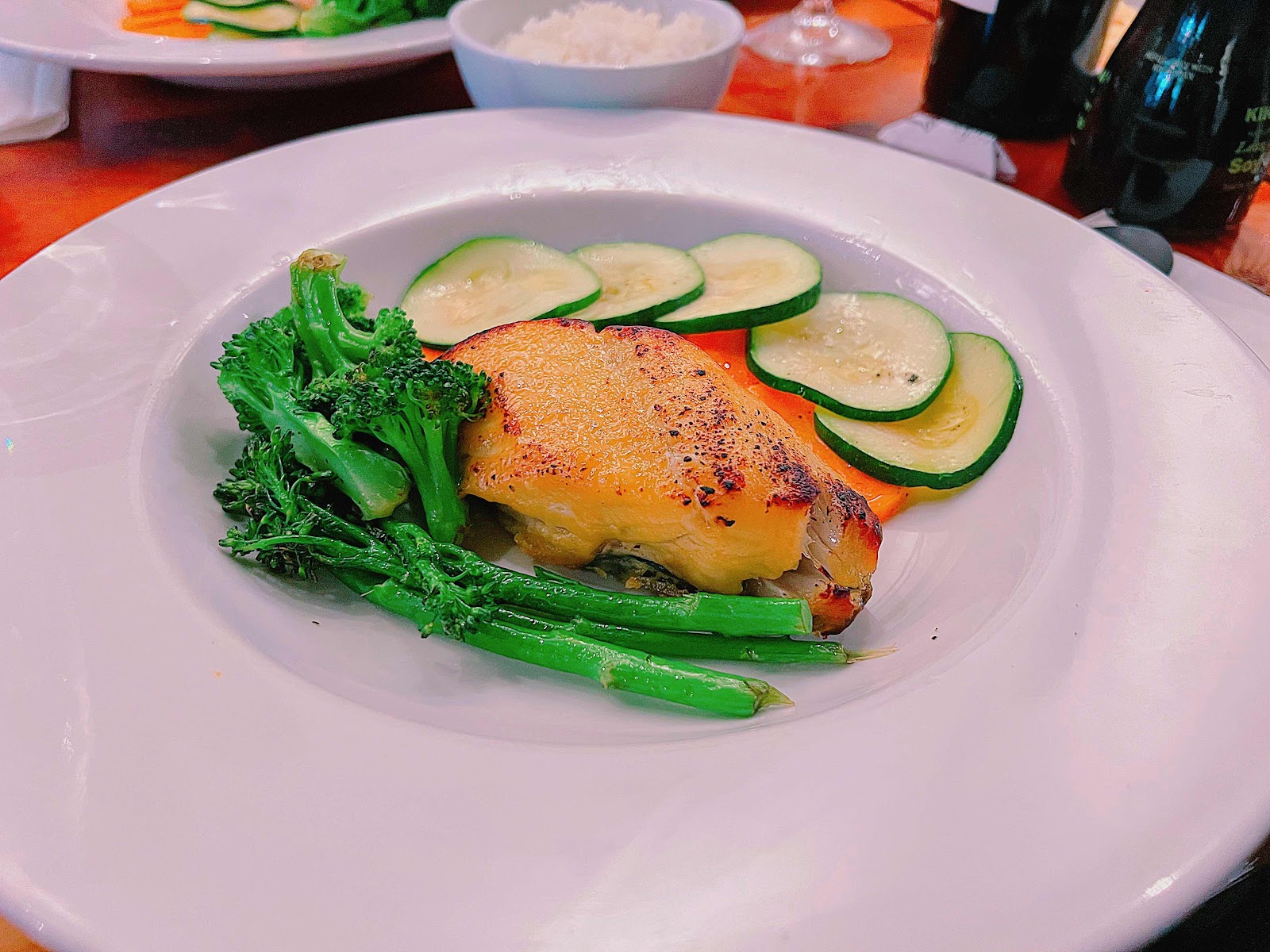
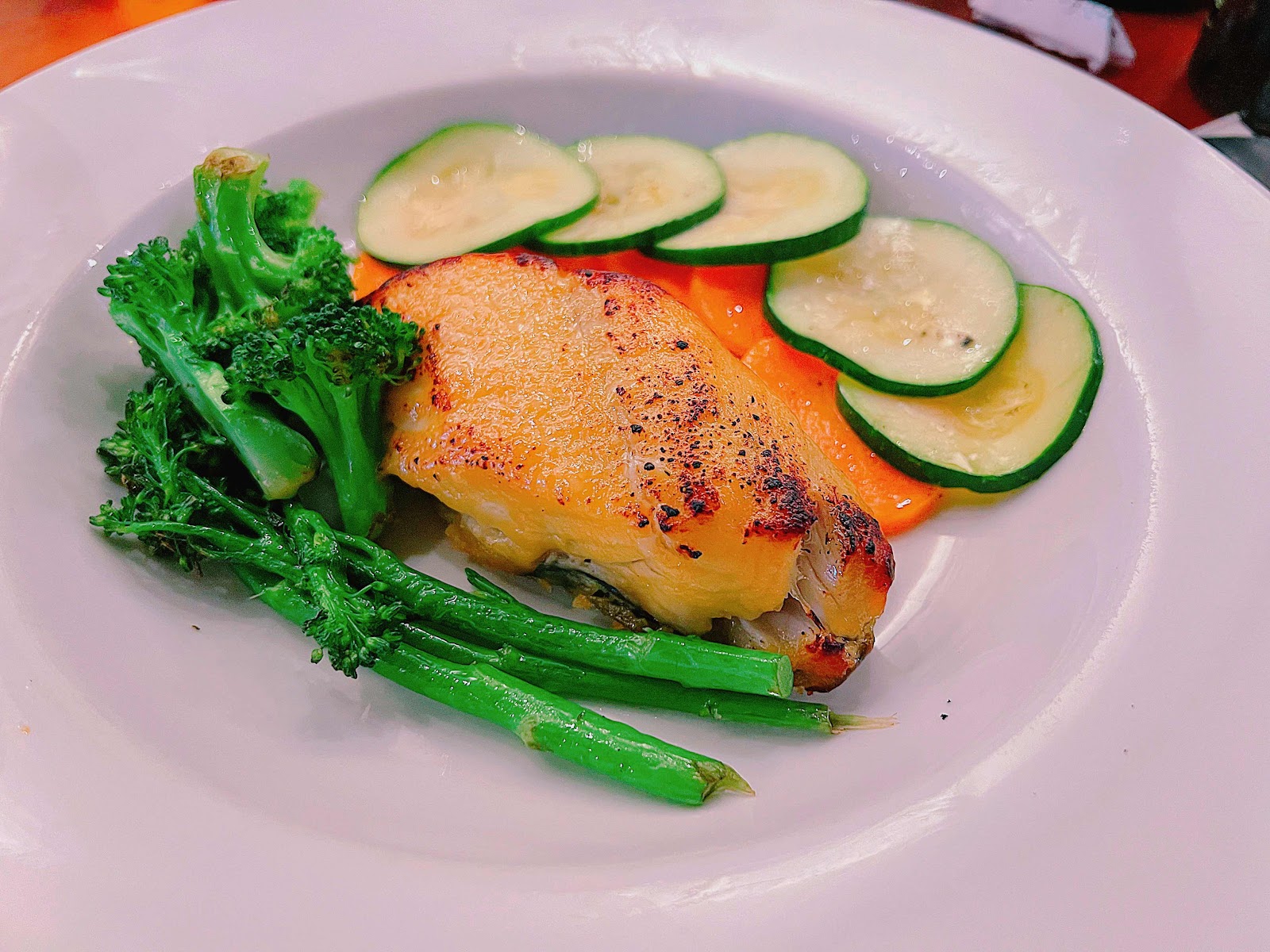
Based on my friend’s recommendation (and plenty of other reviewers), I had to try KOKO’s roasted miso black cod ($36). It’s a solid dish but with a few changes could be even better: including some of the miso sauce on the side for those who want a more flavourful fish or to pour over the steamed rice, removing some of the cod’s bones to make it easier to cut into (even the large shards were left behind), and roasting the skin longer so that it becomes crispier.


Still, I appreciated the decent sized piece of black cod, which was fresh and flaky and there was a nice variety of vegetables included to create a balanced and healthy meal. If only there was more seasoning on the vegetables that seemed to be merely steamed.


For an izakaya, KOKO sure plays it safe with their flavours. What a shame, no Japanese anime characters, and no bold ingredients.


Overall mark - 7 out of 10


How To Find Them
 Location: Toronto, Canada
 Address: 81 Yorkville Avenue


Follow me on twitter to chat, be notified about new posts and more - https://twitter.com/GastroWorldBlog
____________________________
Gastro World's Grading System

  • Anything under 5 - I really disliked and will never go back
  • 6 - decent restaurant but I likely won't return
  • 7 - decent restaurant and I will likely return
  • 8 - great restaurant that I'd be happy to recommend
  • 9 - fantastic restaurant that I would love to visit regularly and highly recommend
  • 10 - absolute perfection!


Is That It? I Want More!

Other Gastro World posts similar to this:


Hana Don Japanese Cuisine & Bar (Markham)


There’s something in the hospitality air lately - I have been receiving great service at restaurants I normally wouldn’t expect it from. It started as soon as I entered Hana Don, a lady advised a high-top table was available, but if I was willing to wait a few minutes there would be a more comfortable one she’d seat us at further into the restaurant. 


The friendly and helpful attitude continued throughout the evening and not just from one person but three great ladies: people came by to check on us, offered suggestions on how to best eat dishes, and the restaurant even provided plastic bags for customers to store their masks (we didn’t use them, but I finally had to ask what the cellophane bags were for). They even started us off with complimentary bowls of miso soup. Maybe they were just happy things were opened again and they could see people in-person, I hope the friendly attitude continues as it’s infectious and makes the dining experience so enjoyable.


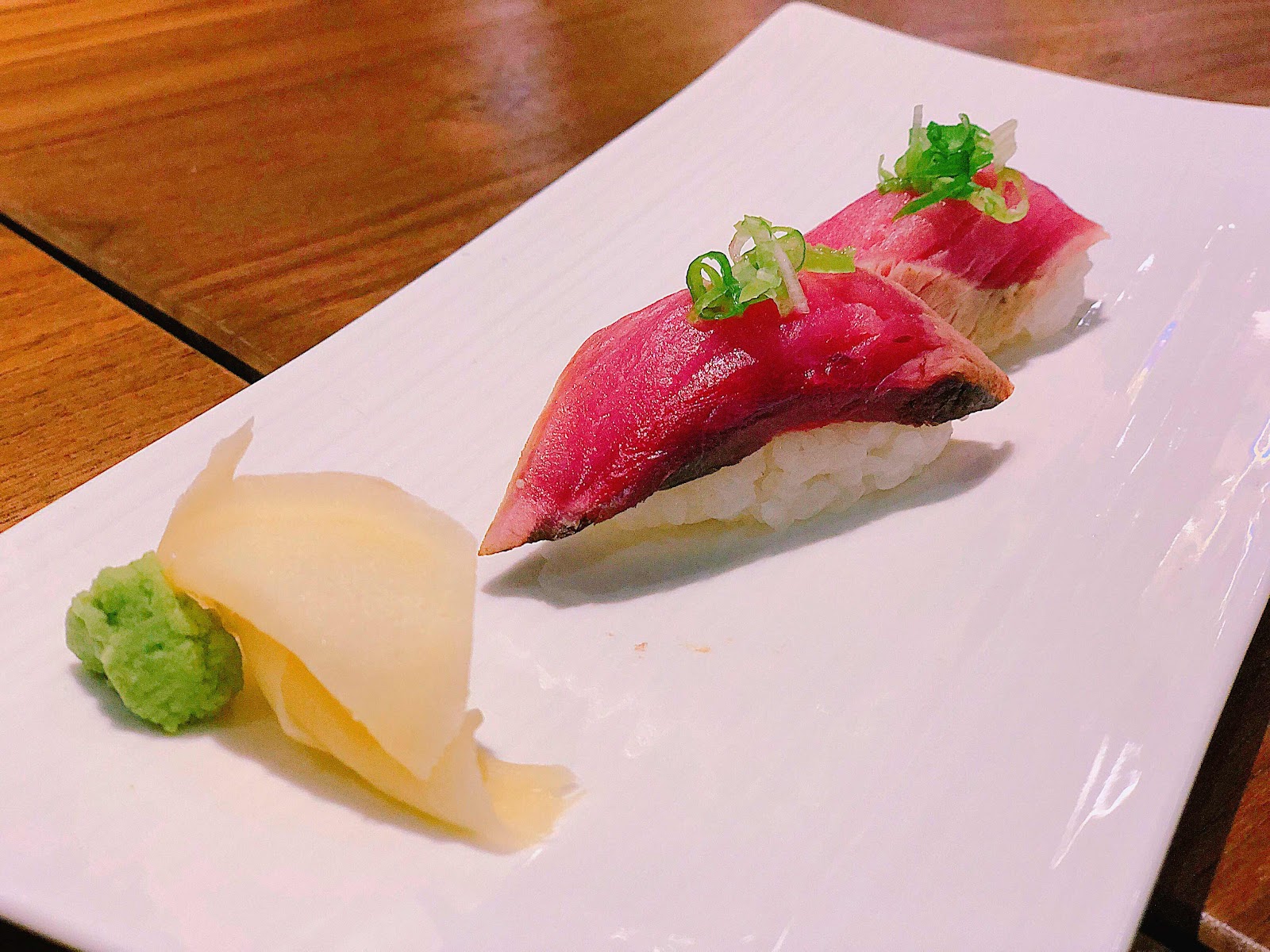
Hana Don sells a huge variety of sushi by the piece, including katsuo a.k.a. bonito or skipjack tuna ($4 per piece), which isn’t a popular item elsewhere. There’s something about the meaty textured fish with the light smoke ring that makes for an interesting bite. At Hana Don it was a little fishier tasting than pieces I’ve had previously, but it also didn’t arrive with a glaze brushed onto the fish - the slightly sweet and salty barrier that balances the bonito flavours. They did try to temper the stronger fish with chopped scallions, it was nonetheless a decent bite to start off the meal.


What you’ll find missing from this post is a review of donburi, the focus of Hana Don’s menu. Sadly, it’s not a dish I enjoy. Don’t worry, these are described and reviewed ad nauseum on Yelp and Google so think of this post as helping you decide what other dishes to add on. The grilled black cod with sakiyo sauce ($16) was delicious – the flesh moist and flaky and the skin perfectly crisped. The thicker pieces helped to create a meaty tender portion and I liked that it was cut in two to make it easier to share. The sake miso sauce was nice and light without that blast of sweetness that can sometimes make it taste like you’re eating black cod with honey. Finishing the dish was a tube of pickled ginger, that I almost mistook as a straw, and was great for cleansing the palette.


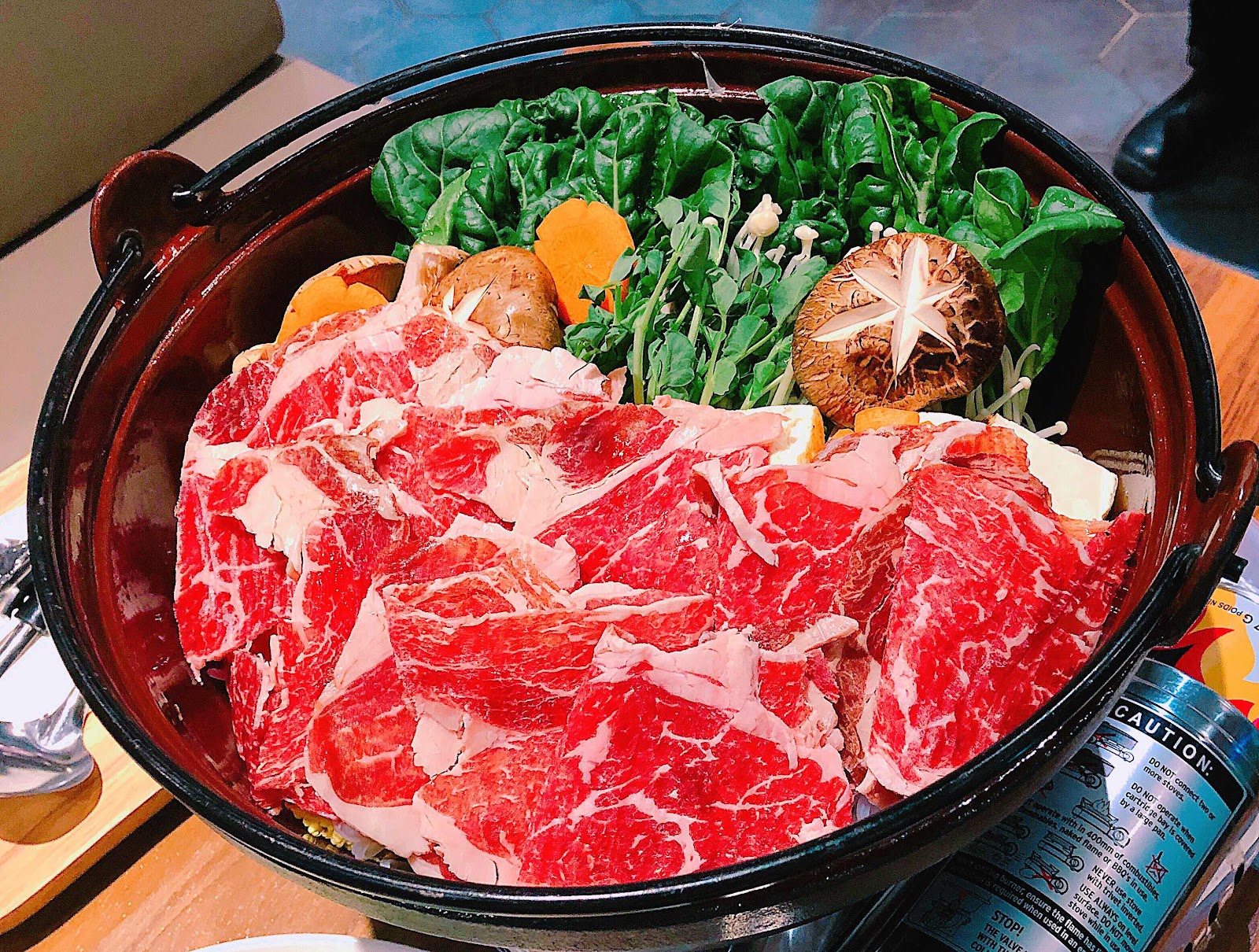
If you’re hungry, go for the beef sukiyaki ($45) a huge pot filled with beef, mushrooms (meaty fresh shiitake, prince oyster mushrooms, and enoki), vegetables (bok choy, napa cabbage, and alfalfa sprouts), grilled tofu, and noodles. While the beef looks really marbled, once it’s cooked through it tastes lean and a bit tough so it’s best to eat the slices quickly. You round out the pot by cracking raw eggs into the sukiyaki broth and blending to create a slightly sweet egg drop soup. In retrospect, this was way too much food for two of us, so we left with full bellies and a doggy bag. They tried to warn us, but it’s such a good addition for a cold winter’s night.  


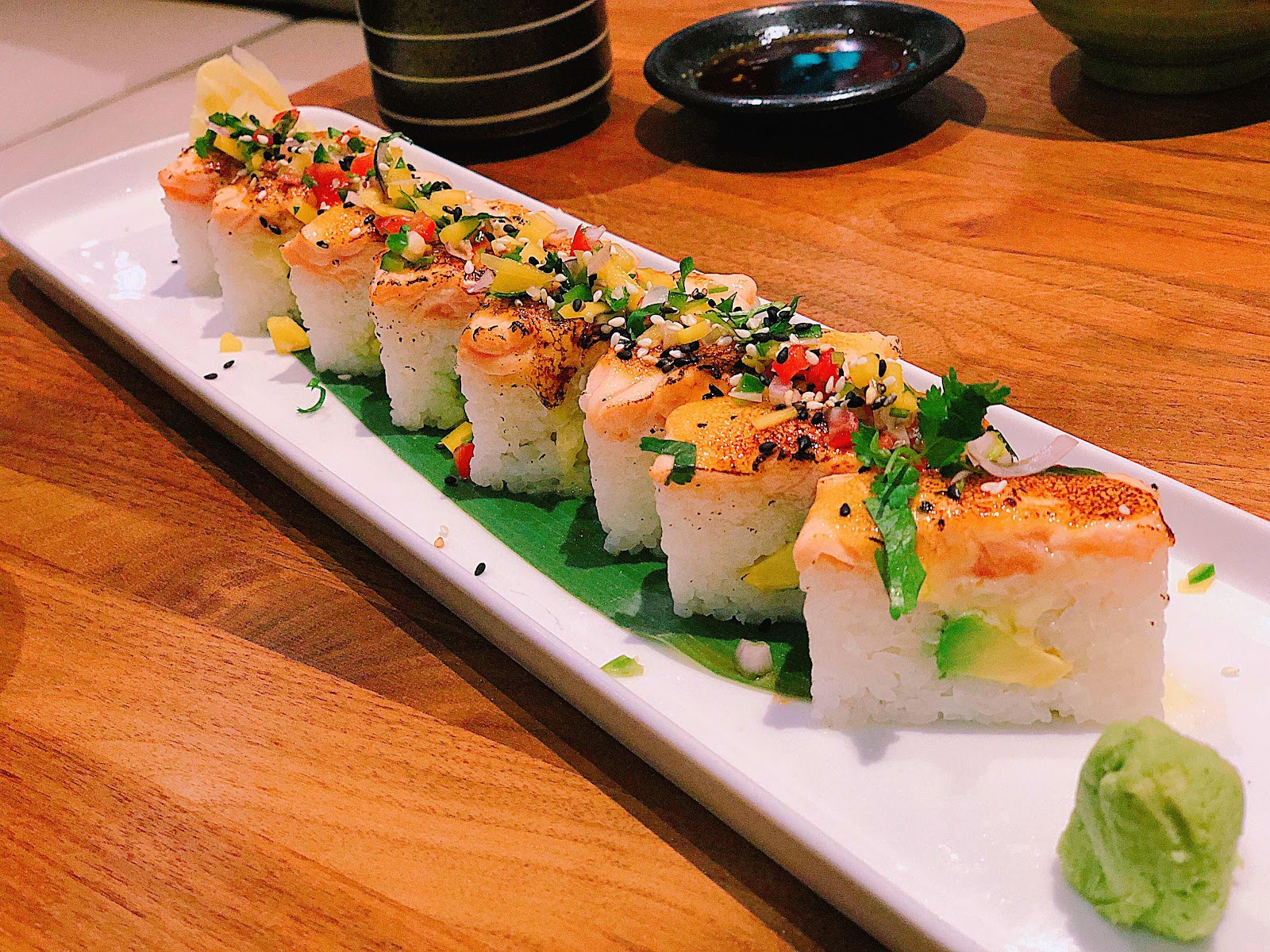
We might have been able to finish everything if we skipped the momo aburi oshizushi ($18) as there were a lot of pieces and each a fair size. Sandwiched between the sticky rice was a creamy tube of avocado and it’s all topped with salmon and a reserved portion of kewpie, which I preferred as when there’s too much mayo the rice becomes oily and heavy. An ingenious addition was the finely chopped cucumber and mango salsa garnish adding a lovely crunch and freshness to something that could be too heavy. 


Overall, our 7:30pm reservation allowed us to stay past two hours to leisurely eat and converse, and Hana Don did a good job at ensuring dishes came out in a good succession – we always had something to eat without having everything arrive at once. I hope this streak of amazing service continues as we all stay in the same good mood of being able to be out and eating/working again.

Overall mark - 8.5 out of 10


How To Find Them
 Location: Markham, Canada
 Address: 9255 Woodbine Avenue
 Website: http://hanadon.ca/


Follow me on twitter to chat, be notified about new posts and more - https://twitter.com/GastroWorldBlog
____________________________
Gastro World's Grading System

  • Anything under 5 - I really disliked and will never go back
  • 6 - decent restaurant but I likely won't return
  • 7 - decent restaurant and I will likely return
  • 8 - great restaurant that I'd be happy to recommend
  • 9 - fantastic restaurant that I would love to visit regularly and highly recommend
  • 10 - absolute perfection!


Is That It? I Want More!

Other Gastro World posts similar to this:


So what exactly is Ocean Wise?


The Ocean Wise seafood program started in Vancouver when a restaurateur approached a member of the education team at the Vancouver Aquarium to ask how they could ensure they were serving sustainable seafood. Good question, they thought. It’s definitely not something where information is readily available for companies, let alone consumers. With that, they developed the Ocean Wise seafood program to assess sustainable options, connect suppliers and restaurants, and allow restaurants to promote these options to diners.

As a foodie, I knew about their sustainability program. For years, I’ve seen their logo grace menus and tried to order those options to ensure my meal has less impact on the Earth. So, when they reached out to ask if I wanted to attend their first complimentary walking tour for the public, I didn’t realize I’d learn anything new about the organization.

The first being that they are so much more than the little logo that’s found on menus. Rather, they are based out of the Vancouver Aquarium and are Canada’s national sustainable seafood program, with the vision to ensure the world’s oceans are healthy and flourishing.

The Ocean Wise Seafood program is part of the Ocean Wise Conservation Association (OWCA) which focuses on: researching about the oceans to arm everyone with knowledge, educating others about what it takes to be sustainable, running the Great Canadian Shoreline which supports volunteer led clean-up projects and limiting the use of plastics, and actually saving marine life through the Marine Mammal Rescue Centre. For consumers, the Seafood Program helps diners make better choices when it comes to eating habits.

Secondly, I learnt they’re not a certification, but are rather a recommendation body that assesses fisheries and then acts as a middle person between fisheries and restaurants. For example, if you’re a chef who really wants to serve a seared tuna appetizer. They determine if there’s a sustainable tuna option and then recommends options as to where the company can purchase from.

Over 700 partners in Canada participate in the program, covering thousands of locations, and it continues to grow as establishments really want to do the right thing. Overfishing is a big issue and as the world’s population grows and more people eat seafood there’s a risk that these populations will become extinct. Already, about 90% of the world’s fish options are considered fully fished or overfished. As consumers, we need to start eating from underutilized species to ensure other generations can actually enjoy seafood in the future.

I’m a big fan of sushi and have heard about the rarity of tuna. Therefore, when Palm Lane, the first stop of the walking tour, served tuna, I was a bit intrigued. In reality, it’s the blue fin tuna that’s reaching dangerously low populations, while the Albacore tuna, especially when line caught (essentially fished one-by-one rather than using a net method that can scoop up a lot of other marine life), is a sustainable option.

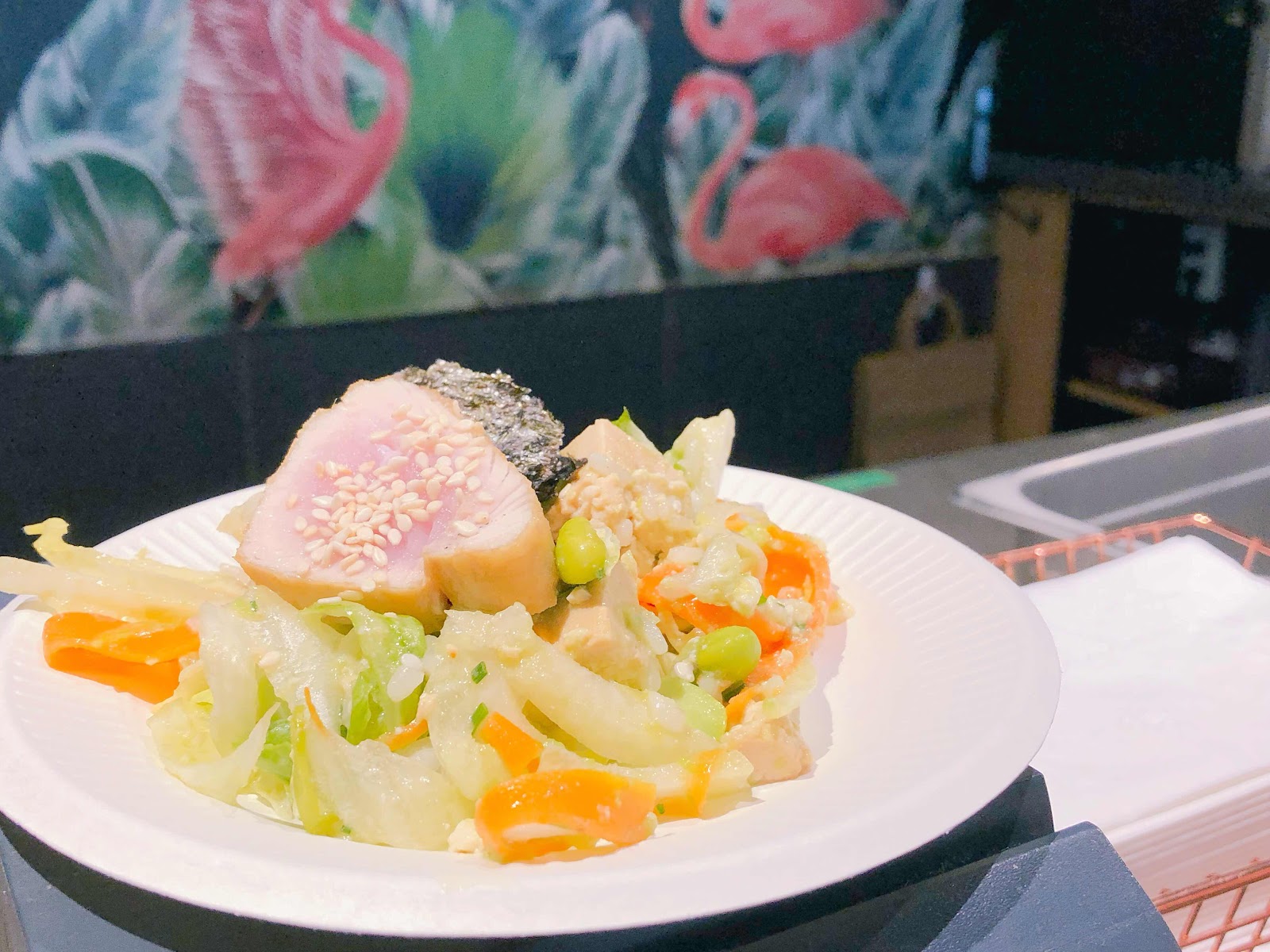
Palm Lane already prides itself by having a large portion of their menu plant-based - the only protein they do serve is Albacore tuna. It’s used in the Osaka salad ($14.25; sample size shown below), which is essentially a deconstructed sushi roll. A bed of nappa cabbage and romaine is topped with a host of vegetables you’d normally find in Japanese cuisine (edamame, nori, pickled vegetables, avocado) and heartier ingredients (sushi rice, sweet potato tempura, and delicious fluffy fried tofu).  Crowning everything are slices of delicately seared tuna that’s simply seasoned and goes so well with yuzu wasabi dressing.  It’s seriously delicious.


Ocean Wise recommends sustainable species based on four criteria:
  • Is it a healthy and resilient species?
  • Is there an effective and adaptive management plan?
  • Lastly, is it harvested in a manner that limits damage to the surrounding environment?
Assessments are written to the Seafood Watch standard. The assessment will ultimately classify the species into two categories: Ocean Wise or Not Recommended. Species are regularly reclassified as new information is known and fisheries are re-assessed at least every 5 years to ensure their harvesting methods are still in line with the recommended practices.

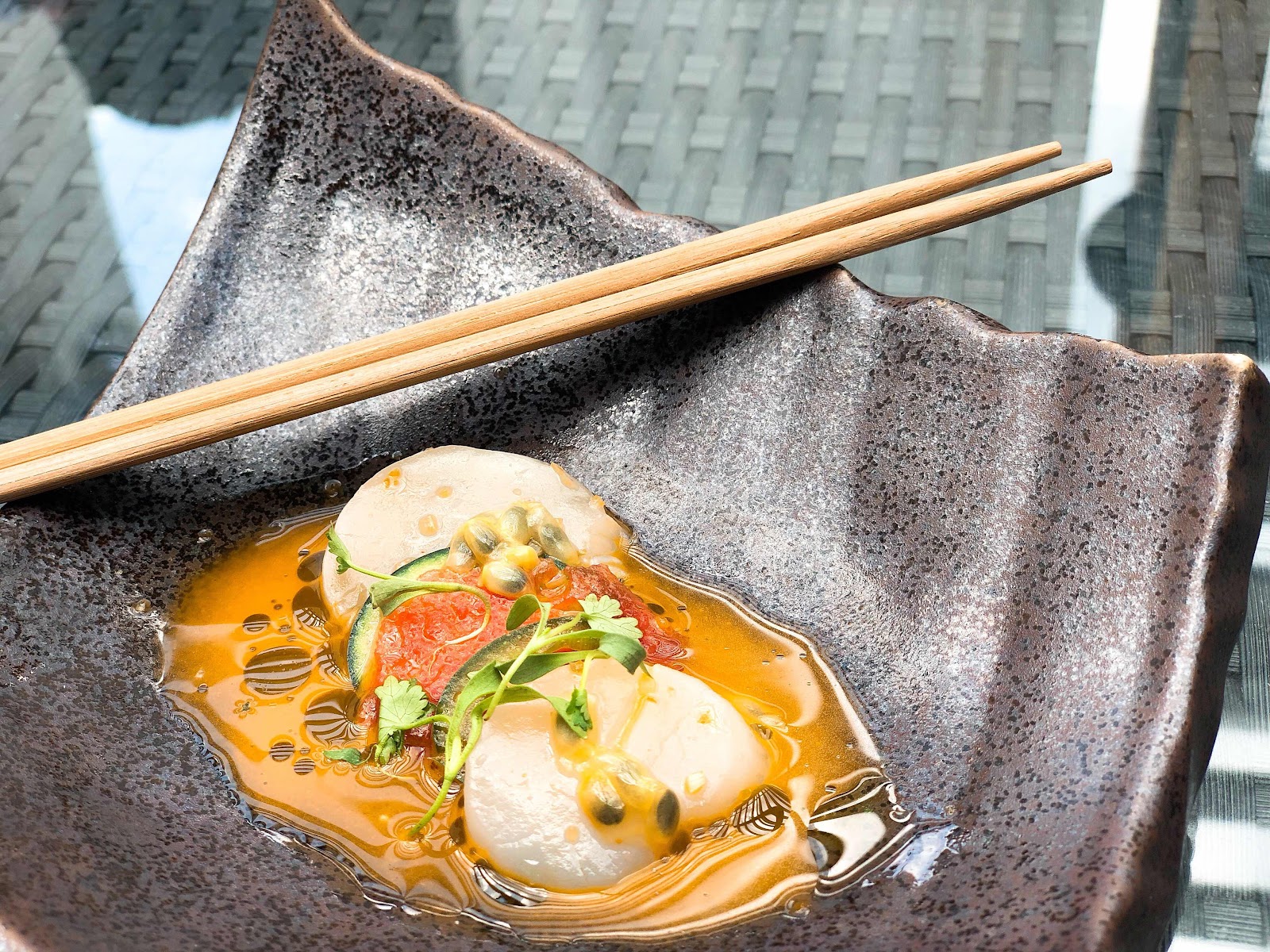
Kasa Moto, being a Japanese restaurant, serves a lot of seafood. Therefore, they were a great stop to showcase how many dishes could be considered Ocean Wise! We started with the scallop ceviche ($18; sample portion shown below) that takes a meaty Hokkaido scallop and soaks it in a sweet, tangy, and slightly spicy passion fruit and sea buckthorn marinade. Cucumber and grapefruit slices add a bit of textual and flavour contrast against the delicate scallop without taking away its natural flavours.


From New Zealand, we’re served a vibrantly red Ora King salmon. These are farmed in an enclosed bay to ensure that they don’t affect other wild life and in an area where the salmon has adequate space to swim around. Ocean Wise explains that they don’t necessarily think that only wild options are the best. In order to be sustainable, we’ll need to raise some of the seafood we eat… unfortunately, Mother Nature won’t naturally create enough marine life to support the world.

Where farming becomes dangerous is when they overcrowd the fish and add antibiotics and other chemicals into the water to ensure the fish resist diseases in the close quarters. Therefore, Ocean Wise only recommends farms that meet their criteria for sustainable aquaculture practices.

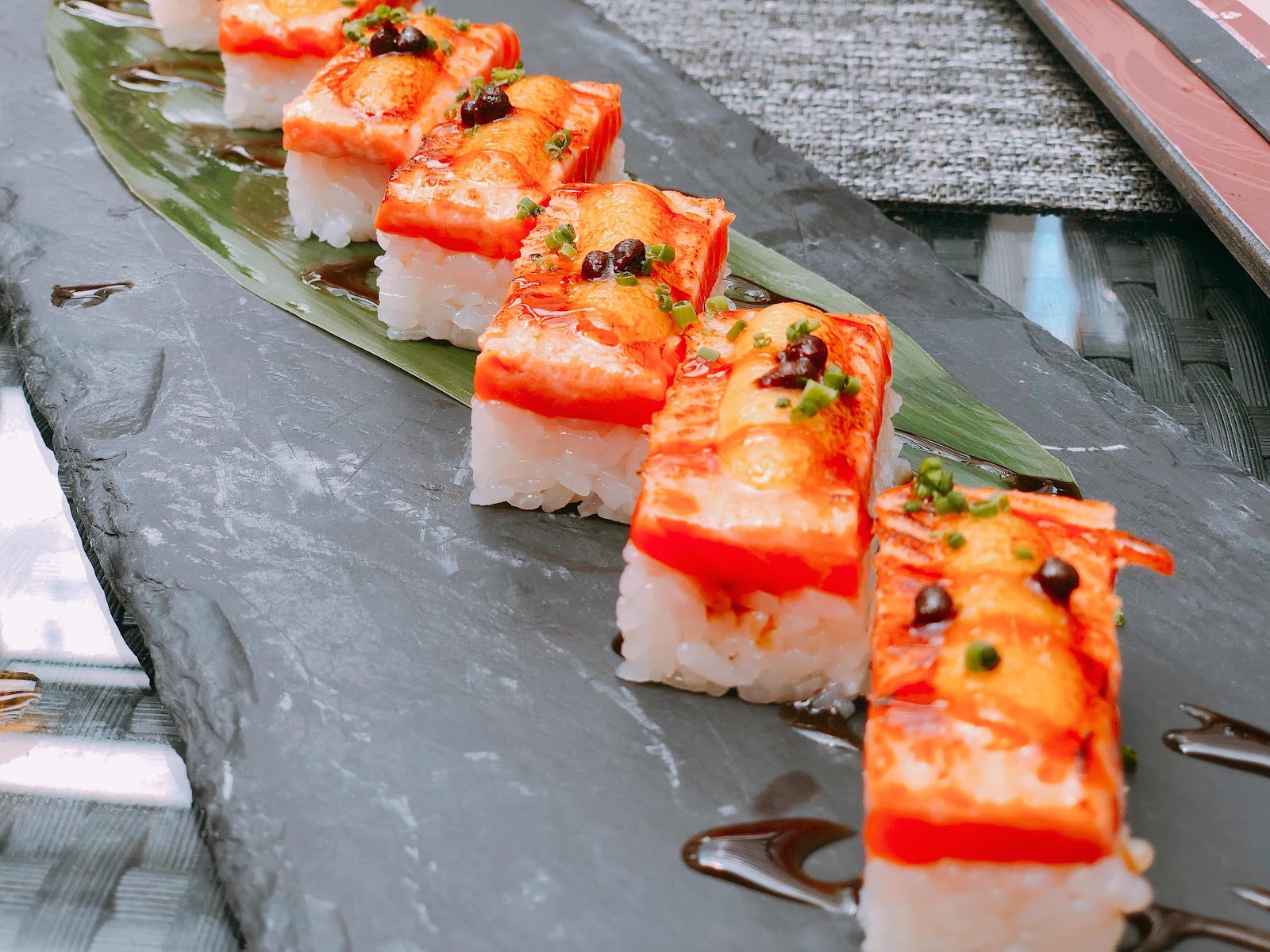
The pressed Ora King salmon sushi ($19) is prepared aburi style so the already fatty fish is topped with garlic aioli and blow torched quickly, melding all the fasts together so it starts seeping into the rice. Indeed, it makes for a rich and decadent bite as all the flavours melt onto your tongue leaving a sweet smokiness.


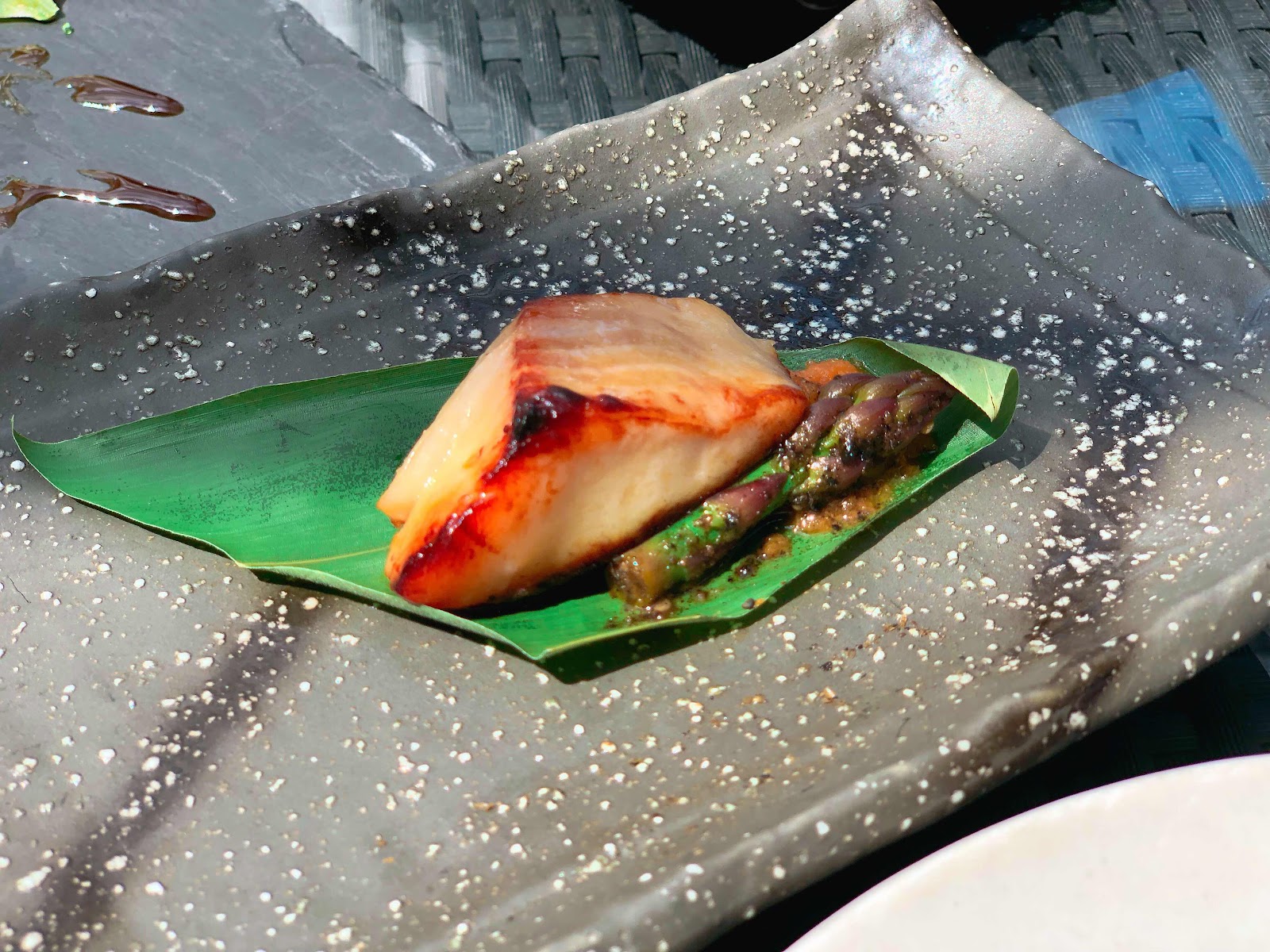
I’m also delighted to hear one of my favourite dishes, miso black cod ($45; sample portion shown below) is also part of the Ocean Wise Life program. This fish arrives closer to home, coming from the west coast of British Columbia. The sablefish (another name for black cod) is oven baked until flakey and paired with grated ginger and carrot, a spear of pickled asparagus, and vinaigrette to give it a refreshing finish. 


Having eaten at Kasa Moto when it first opened, I love their revamped menu. It leans more towards traditional dishes where the seafood is left relatively neutral so its natural flavours are more pronounced.
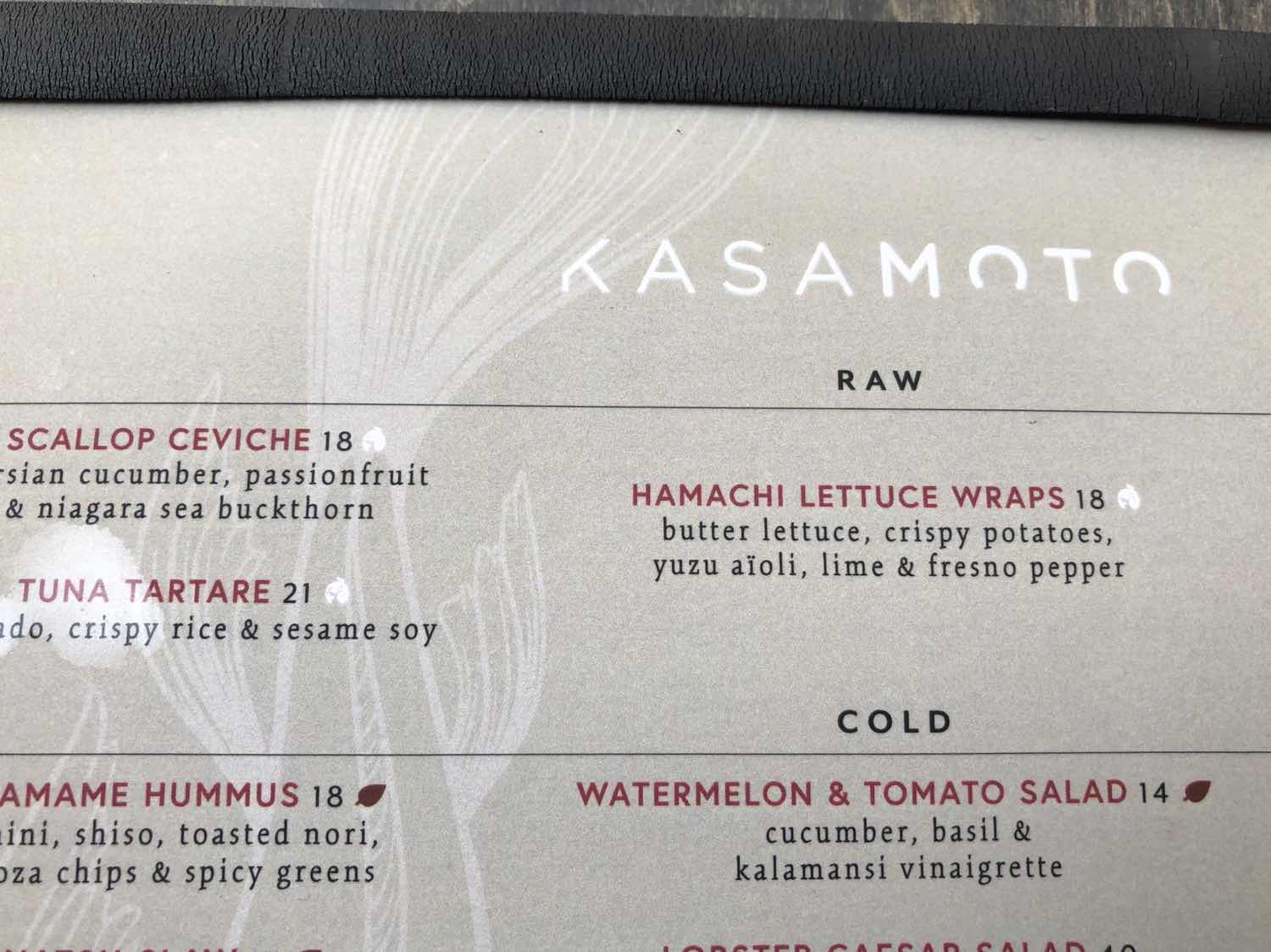
Example of the Ocean Wise symbol on Kasa Moto's menu
So, what information do we need to make sure something is sustainable? If the Ocean Wise symbol isn’t available (say you’re at a grocery store), you need three pieces of information: (1) what species the marine life is, (2) where it’s from, and (3) how it’s harvested. Then, you can go to their website and enter the information where you’ll get the same yes or no recommendation.

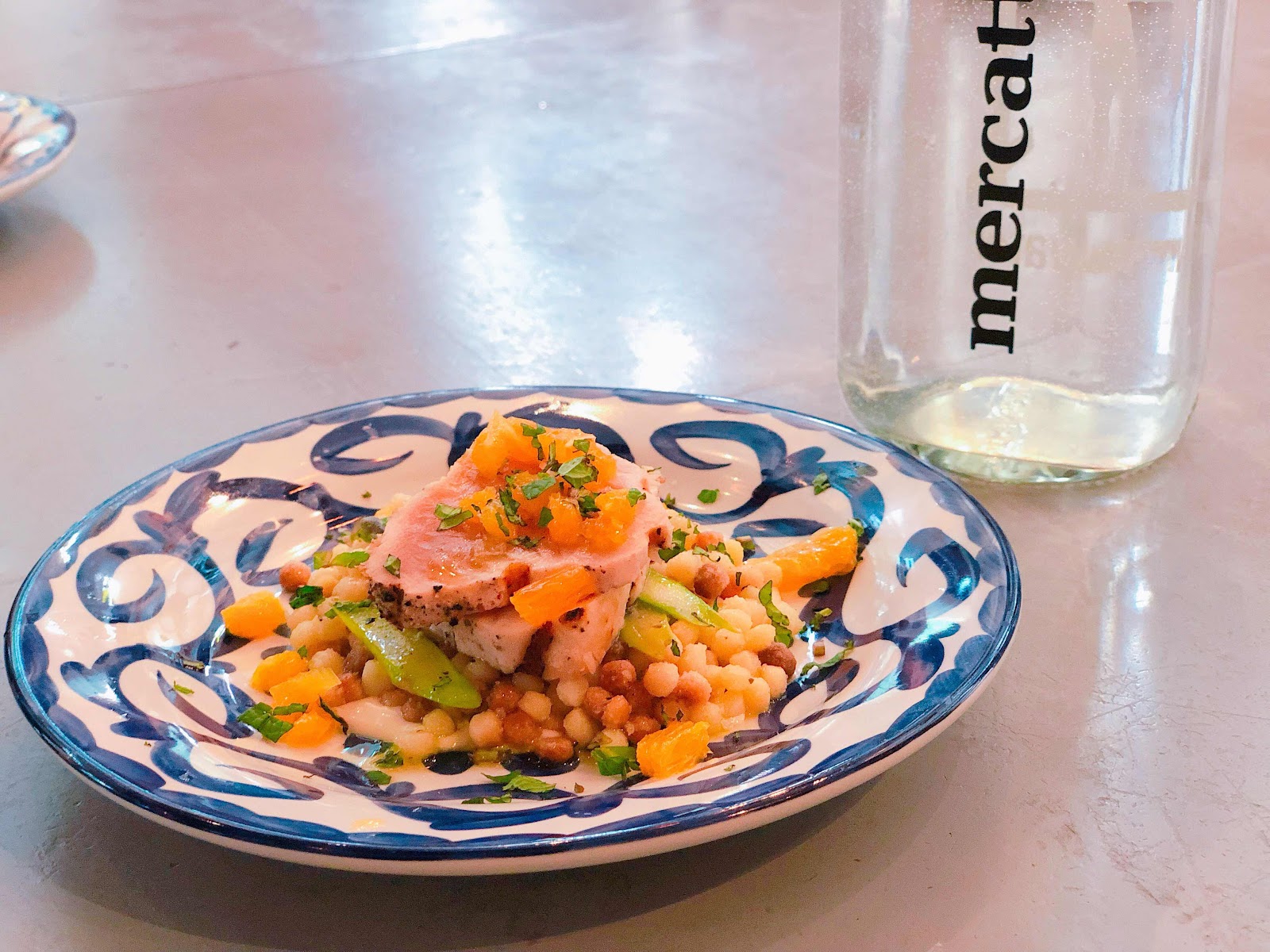
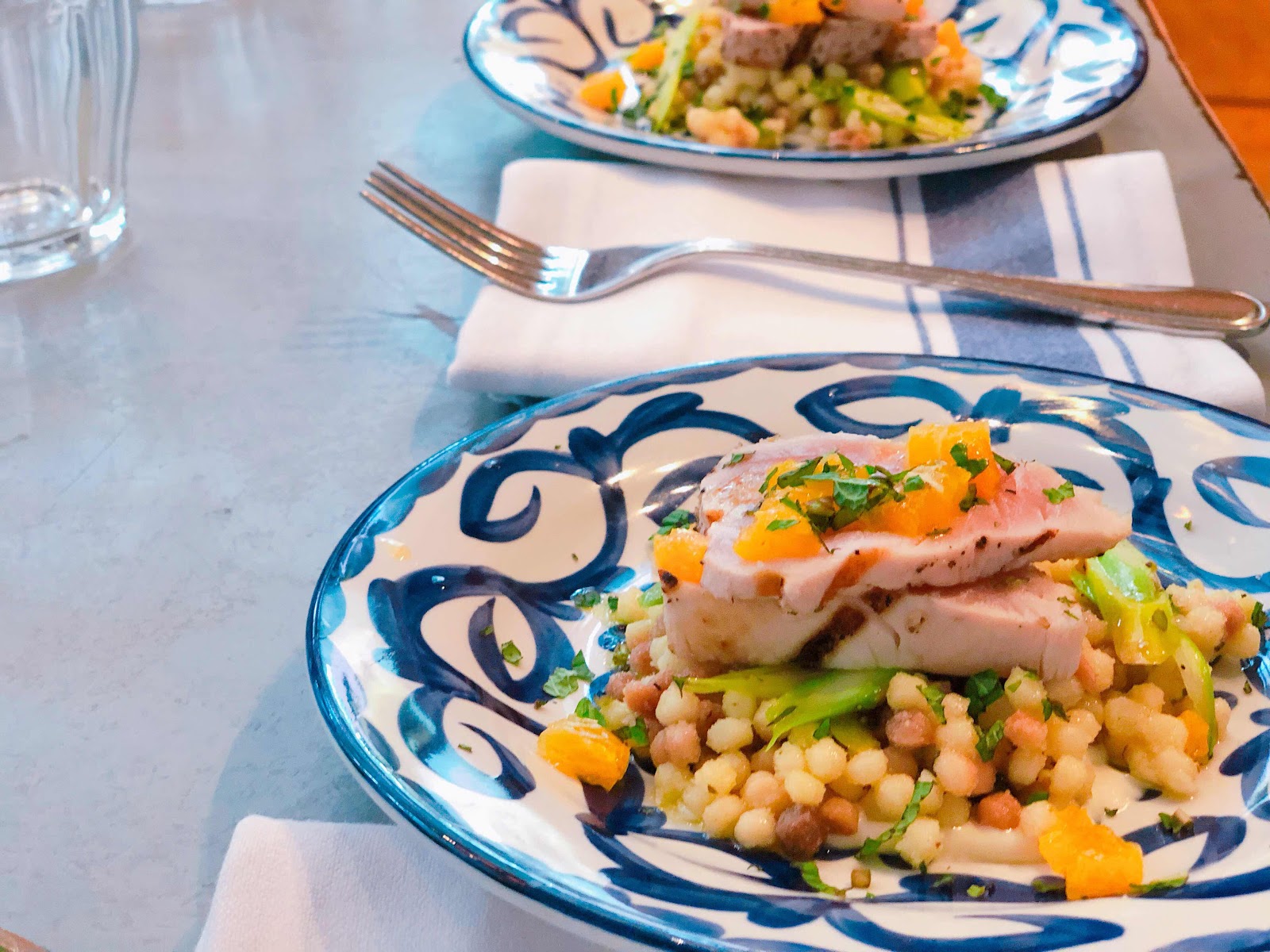
For our last stop, Mercatto created an Albacore tuna dish especially for the tour. The fish is one that’s used at their various Toronto restaurants, customized to local tastes. For our visit, they paired the seared tuna with a creamy fregola augmented with Ontario asparagus shavings. It’s not part of current menu, but I highly suggest serving it as a special.


It’s at Mercatto where Chef Doug Neigel really gets to the crux of why they are part of Ocean Wise. Yes, of course, they want to do what’s right and be sustainable… but, it’s also something that clients want. Like any business, restaurants are catering to their customers’ tastes. So, if you really want to see Ocean Wise recommendations on a menu, as a customer you should suggest it. In fact, this desire is what caused Mercatto to source a sustainable calamari option for all their locations.

I’m glad more restaurants and consumers are starting to think about sustainability. Hopefully, it’s not too late to turn it around for the impacts that we have already made. With that said, it’s just the start and there’s still so much to be done. I hope customers will quickly demand that the industry begins thinking about animal welfare as well. Sure, something is sustainable, but are we also harvesting marine life in a way that’s humane?

It’s a good start that we’re not overfishing Albacore tuna, but if they are taken out of the ocean and put into small packed cold holding tanks or worse yet, removed from water so they end up suffocating for hours until they actually die, is there a better way of getting that fish to plate? I’m hopeful that we’ll soon get there.

To end this on a positive note, a special thanks to zoologist Kristen Rodrigo (who was also part of the tour), for sharing a quote that should be an inspiration for everyone. It comes from Anne Marie Bonneau, a zero waste chef, “We don’t need a handful of people doing zero waste perfectly. We need millions of people doing it imperfectly.”

By no means are we perfect, but let’s do what we can. For a start, let’s go out and look for the Ocean Wise symbol below when we’re ordering from restaurants or buying seafood at stores. Then, let’s graduate for politely asking for it at places where we’re regular customers. If millions of people enact small changes, it may be all we need to make changes big enough to save the Oceans.


Disclaimer: The above food samples were from a complimentary walking tour run by Ocean Wise Life.  Rest assured, as noted in my mission statement, I will always provide an honest opinion.


How To Find Them


Follow me on twitter to chat, be notified about new posts and more - https://twitter.com/GastroWorldBlog


Is That It? I Want More!

Other Gastro World posts similar to this:


Going back to Akira Back (Toronto)


When Chef Back visited Toronto in July, I returned to Akira Back to sample their “new” menu. My first visit to the restaurant was fine, but it wasn’t impressive. Surely things will be better when the head honcho is in town? After all, he has his name to protect.

Upon cracking open the menu, I was disappointed to see not much has changed. Indeed, a couple of dishes were added but by and large everything remained. The only surprised for the evening was a special lobster 4-ways menu for two ($100). Our waitress noted they’re testing the dishes to see if there’s interest, so what’s detailed in the post is subject to change or may be discontinued all together.


I think most of us coughed on our first sip of the lobster miso soup as we weren’t expecting it to be spicy. The initial surprise aside, the rich hot broth was delicious, the lobster legs infusing the salty and spicy soup. Plump little mushrooms were strewn throughout and a nice addition with the seafood essence.


Having had lobster sashimi a couple of times, Akira Back was the best experience - the lobster tail lightly torched to take away any gumminess, but the meat left raw and sweet. A bit of the freshly grated wasabi and house made soy sauce was all it took to flavour the dish.


The lobster tempura was okay, but since the batter was dense (where are the wispy crunchy bits of tempura?) it ended up tasting like fish sticks instead of chunks of lobster claw. Akira Back needs to work on the batter’s consistency and frying temperature of the oil as the sea urchin tempura ($18) was no better. The creamy urchin wrapped with citrusy shiso leaves was a good idea, if it weren’t for the heavy coating that completely covered the seafood.


What arrived with the fourth course seemed too small for two people - a small sliver of poached lobster with nori butter sauce. In general, this menu for two would be insufficient, tables will need to add on a couple of items to round out the meal. Perhaps a bowl of the wagyu fried rice ($14) for some grains? While it is a tad oily – not surprising with wagyu – the rice had such a great wok hay essence. It’d be even better with more scallion.


Akira’s miso black cod ($31) incorporates the traditional sweet glaze but I’ve had better (and for more reasonable prices compared to the dainty portion of fish). Regardless, it was decently prepared, the black cod having a light smokiness and the glaze slightly caramelized for an extra bit of texture. At least it was better than the wagyu short ribs I previously had; although hot izakaya dishes are not Akira’s forte.


Their cold dishes are much better. The Hokkaido scallop kiwi ($23) was no exception. Sliced raw scallops are layered with kiwi and flavoured with an onion salsa and yuzu soy. The dish is refreshingly delicious and shows restraint, so the scallop’s sweetness isn’t overtaken by the other flavours – even the onion salsa isn’t too strong, adding flavour but not sting.


With Chef Back’s visit there was also a special dessert… date ice cream with a mango mousse ($15). A plate of granita first arrives with an egg carton in tow. Our waitress proceeds to take out an “egg”: the shell made from candy; the whites a date ice cream; and the yolk mango passionfruit sorbet. Luckily, I took the picture before everything was crushed into the sweet ice, creating a dessert reminiscent of bing su. The light dessert was a beautiful and whimsical finish. Maybe things are better when Akira Back is back.


Overall mark - 7.5 out of 10


How To Find Them
 Location: Toronto, Canada
 Address: 80 Blue Jays Way, 2nd floor
Follow me on twitter to chat, be notified about new posts and more - https://twitter.com/GastroWorldBlog
____________________________
Gastro World's Grading System

  • Anything under 5 - I really disliked and will never go back
  • 6 - decent restaurant but I likely won't return
  • 7 - decent restaurant and I will likely return
  • 8 - great restaurant that I'd be happy to recommend
  • 9 - fantastic restaurant that I would love to visit regularly and highly recommend
  • 10 - absolute perfection!


Is That It? I Want More!

Other Gastro World posts similar to this: